How to Choose Brined Boletus Mushrooms in Drum for Food Processing, Sauces and Wholesale Distribution (2)
How to Calculate the Cost for a Full Container
Importers should go one step beyond the product price.
A useful calculation is:
Total landed cost = Product cost + Freight + Insurance + Import charges + Port handling + Inland transportation
Then calculate:
Landed cost per usable kg = Total landed cost ÷ Total drained mushroom weight
For example, if an importer receives 100 drums and each drum contains 45 kg of drained mushrooms:
100 × 45 kg = 4,500 kg of usable mushroom
If the total landed cost is $13,500:
$13,500 ÷ 4,500 kg = $3.00/kg
This figure is much more useful for comparing different international suppliers.
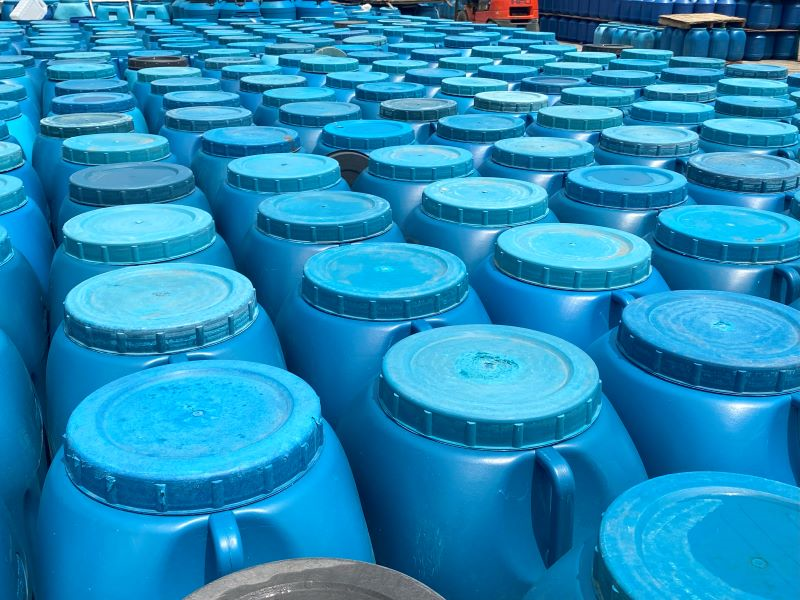
Why Drum Dimensions Matter
Drum size affects more than warehouse appearance.
It influences:
Container loading
Freight cost
Warehouse space
Handling equipment
Pallet configuration
Storage planning
Two suppliers may both offer 45 kg of drained mushroom but use different drum configurations.
If one drum takes up considerably more space, the difference can affect the number of drums that fit into a shipment.
For large-volume importers, packaging efficiency can therefore have a direct effect on landed cost.
What Makes a Good Brined Boletus Sample?
Sample evaluation should be structured.
First, inspect the product visually.
Is the mushroom size within the agreed range?
Is the appearance consistent?
Are there excessive broken pieces?
Does the product match the stated grade?
Second, check the drained weight.
Third, evaluate the texture.
Fourth, test the mushroom in the actual recipe.
Finally, compare the result with the factory's existing ingredient.
This last step is especially useful.
The question is not simply “Is this mushroom good?”
The more useful question is “Does this mushroom work better for our production requirements?”
Why Repeatability Matters More Than a Single Good Sample
A supplier can send one excellent sample.
That does not automatically prove that every future shipment will be identical.
For B2B food purchasing, repeatability is one of the most important supplier characteristics.
A buyer should therefore ask how the supplier manages:
Raw material selection
Size grading
Processing
Quality inspection
Drained weight
Packaging
Batch records
Repeat production
The objective is to establish a product specification that can be used for future orders.
Supplier Questions for Long-Term Purchasing
If the buyer expects to purchase several containers per year, supplier evaluation should go beyond the first quotation.
Ask:
Can the supplier provide the same grade consistently?
Can the supplier support repeat orders?
How is the mushroom size controlled?
How is drained weight checked?
How is the finished product inspected?
What is the typical production lead time?
What is the monthly supply capability?
Can samples be retained for future comparison?
Can export documentation be prepared according to the destination market?
Can the supplier communicate quickly when raw material conditions change?
These questions become especially important when a buyer is building a private-label or long-term distribution business.
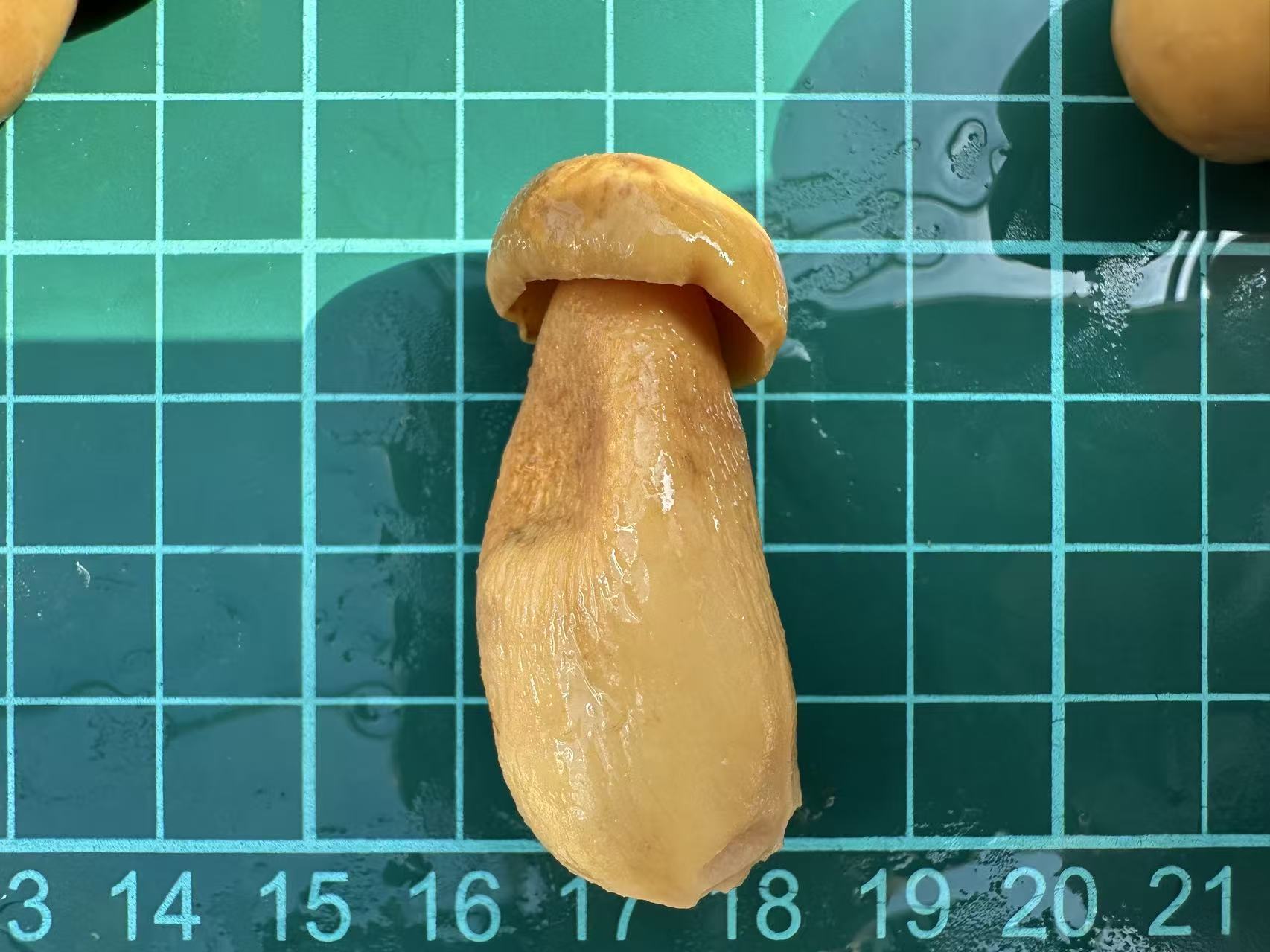
What Current YIHONG Boletus Specifications Show
YIHONG's current product range includes several Boletus Edulis In Brine grades rather than a single standardized product.
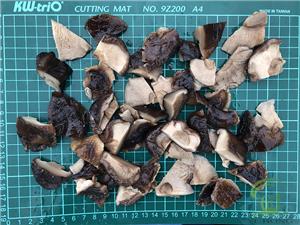
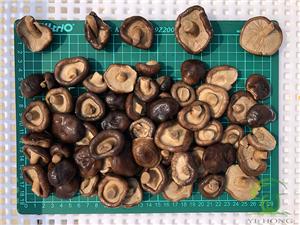
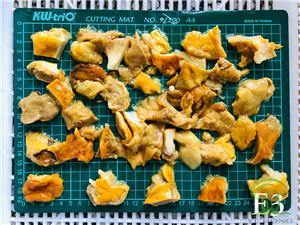
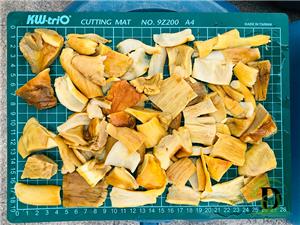
For example, the listed A2 product is specified at 1.6–3.5 cm, packed in drums, with a 24-month shelf life. The listed E3 product uses a 1–5 cm size range and drum packaging. Another B3 product is listed at 4–6 cm.
This type of product range is useful for B2B buyers because the required specification can be matched more closely to the intended application instead of forcing every customer into one mushroom size.
Actual specifications, availability, packing weight, and delivery conditions should always be confirmed with the supplier before an order is placed.
Boletus Supplier Location and Raw Material Supply
Raw material access can influence the stability of a processed mushroom supply chain.
YIHONG is located in Xiuyan, Anshan, Liaoning Province, China, an area associated with agricultural and mushroom resources. The company states that its boletus products are sourced from local mushroom growers.
For international buyers, this information is useful as part of supplier evaluation, but it should not replace actual product testing.
The strongest evaluation combines:
Raw material source + processing capability + specification control + sample performance + supply capacity.
How to Write a Better RFQ for Brined Boletus
A vague RFQ often produces vague quotations.
Instead of writing:
“Please quote your brined boletus mushrooms.”
Provide the following information:
| RFQ Item | Example |
| Product | Brined Boletus Mushrooms |
| Format | Whole / Cut |
| Size | Required size range |
| Packaging | Drum |
| Quantity | Estimated drums or containers |
| Application | Sauce / Pizza / Prepared Food / Wholesale |
| Destination | Destination country and port |
| Required documents | According to destination-market requirements |
This gives the supplier enough information to recommend the right grade and calculate a more realistic quotation.
When Should You Request a Sample?
For a first order, the answer is simple: before committing to a large quantity whenever possible.
A sample allows the buyer to evaluate the mushroom in the real production environment.
It also creates a reference point.
If the buyer later places repeat orders, the approved sample can become part of the internal purchasing specification.
This helps both the buyer and supplier communicate more clearly.
Brined Boletus Is an Ingredient, Not Just a Commodity
This is perhaps the most important point for commercial buyers.
A mushroom should not be evaluated only as a commodity with a price per kilogram.
It is also a production ingredient.
The right ingredient can reduce additional processing, improve production consistency, simplify inventory planning, and reduce purchasing uncertainty.
The wrong ingredient can create hidden costs even when the initial quotation looks attractive.
Final Buyer Checklist
Define the final food application.
Choose the appropriate boletus size.
Confirm the grade.
Specify whole or cut format.
Request drained weight.
Request gross weight.
Confirm drum dimensions.
Calculate cost per drained kilogram.
Estimate landed cost.
Request a sample.
Test the sample in the actual recipe.
Confirm MOQ and lead time.
Check repeat-order capability.
Confirm required export documentation.
Conclusion
Choosing Brined Boletus Mushrooms in Drum should begin with the buyer's production requirements rather than the supplier's lowest quoted price.
The right product depends on the final application, mushroom size, grade, processing method, drained weight, packaging, and supply plan.
For food manufacturers, a small difference in mushroom specification can become a significant difference after hundreds of drums have been processed. That is why sample testing, drained-weight calculation, and application-based purchasing are so important.
YIHONG supplies multiple Boletus Edulis In Brine specifications and works with buyers who require bulk mushroom products for food processing and distribution. If you are looking for a suitable brined boletus specification, provide your application, required size, estimated quantity, and destination market so the product can be matched to your purchasing requirements.