Brined Boletus Mushrooms in Drum: A Practical Buying Guide for Food Importers and Mushroom Distributors (2)
What Should Buyers Check on a Brined Boletus Specification Sheet?
| Specification | Why It Matters |
|---|---|
| Mushroom species | Confirms the exact product being purchased. |
| Grade | Helps define the commercial quality and intended application. |
| Size | Affects appearance, processing, and portioning. |
| Whole or cut format | Determines how much additional processing is required. |
| Drained weight | Shows the usable mushroom quantity. |
| Gross weight | Important for logistics and freight calculations. |
| Drum dimensions | Useful for warehouse and container planning. |
| Shelf life | Important for inventory planning and distribution. |
| MOQ | Determines whether the supplier fits the buyer's purchasing volume. |
| Lead time | Helps plan production and replenishment. |
Brined Boletus Mushrooms for Sauce Production
Mushroom sauce is one of the applications where brined boletus can be particularly useful as an ingredient.
For sauce manufacturers, the mushroom does not necessarily need to remain visually large. Instead, buyers may care more about mushroom flavor, texture, size consistency, processing efficiency, and the ability to supply the required volume.
A manufacturer should test the mushroom in the actual sauce formula before making a large purchase.
Important questions include:
Does the mushroom maintain a suitable texture after cooking?
Does the size work with the production equipment?
Does the mushroom distribute evenly through the sauce?
Does the salt level fit the recipe?
How much usable mushroom remains after draining?
Does the sample perform consistently between batches?
A laboratory-style sample test is useful, but a production-line test can be even more valuable because it shows how the mushroom behaves under the actual manufacturing conditions.
Brined Boletus for Pizza and Prepared Foods
Pizza manufacturers and prepared-food producers often need mushrooms that can be distributed consistently across the final product.
In this type of application, size and cut become especially important.
If the pieces are too large, the manufacturer may need additional cutting. If the pieces are too small, the visual appearance may not meet the product requirements.
Therefore, a buyer should not simply request “brined boletus.” A better purchasing request would specify the desired size, cut, drained weight, packaging, quantity, and intended application.
This gives the supplier a much clearer basis for preparing a quotation and sample.
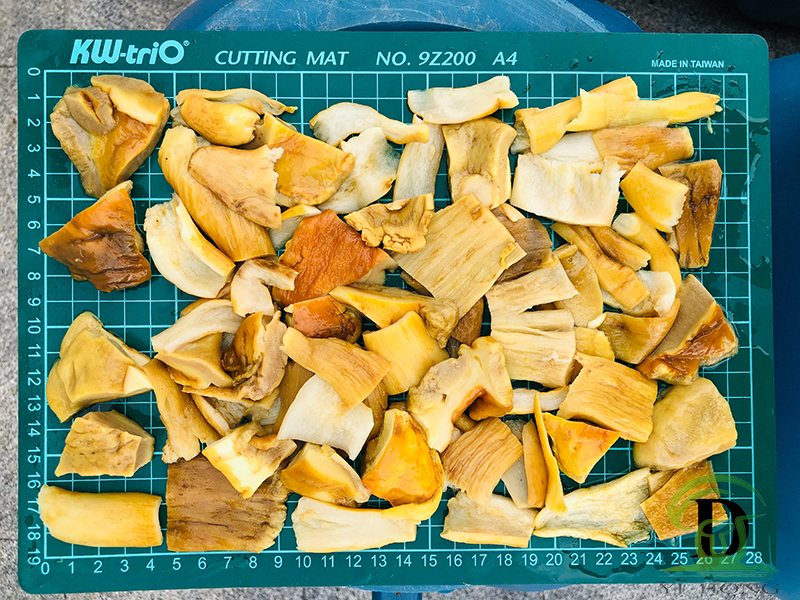
How to Evaluate a Sample Before a Bulk Order
A sample should not be judged only by opening the package and looking at the mushrooms.
For commercial buyers, a sample evaluation should be connected to the actual production process.
Start by checking the physical condition of the product.
Appearance
Mushroom size
Size consistency
Color
Texture
Visible defects
Brine condition
Next, measure the usable mushroom quantity according to the agreed draining procedure.
Finally, use the mushroom in the intended recipe.
A sample that performs well in a container may not necessarily perform well in a sauce, soup, pizza, pasta product, or prepared meal.
How Packaging Affects International Mushroom Purchasing
For an international buyer, packaging is part of the supply chain rather than simply a container.
The product may travel through several stages:
Factory → Truck → Port → Container → Ocean Shipment → Warehouse → Production Facility
Every stage creates requirements for weight, dimensions, handling, storage, labeling, and loading.
Before placing a large order, ask the supplier for the drum dimensions, gross weight, drained weight, loading quantity, pallet information where applicable, and shipping details.
This information can then be passed to the freight forwarder for a more accurate logistics calculation.
Why the Cheapest Drum Price Is Not Always the Best Deal
Price is important in B2B food purchasing, but price alone can create misleading comparisons.
Suppose one supplier offers a drum at $110 while another offers the same-looking product at $120.
If the first supplier provides a lower drained weight, has more variable mushroom sizes, or creates additional processing work, the apparent price advantage may disappear after the product reaches the factory.
The real purchasing equation is closer to:
Product Cost + Freight + Import Costs + Handling + Processing Loss + Additional Labor
This is why buyers should compare total purchasing value rather than only the supplier's initial quotation.
Questions to Ask a Brined Boletus Supplier
Before requesting a final quotation, prepare a clear list of questions.
What boletus species and grade are available?
What mushroom sizes can you supply?
Is the product whole or cut?
What is the drained weight per drum?
What is the gross weight?
What is the drum size and packaging configuration?
What is the shelf life?
What is the minimum order quantity?
What is the normal production lead time?
Can you provide a sample?
Can the product be tested before bulk production?
What export documents are available for the destination market?
What is the expected loading quantity per container?
A supplier that can answer these questions clearly gives the buyer a much better basis for making a purchasing decision.
Who Should Consider Buying Brined Boletus Mushrooms in Drum?
This format is particularly relevant to companies purchasing mushrooms for commercial production rather than household consumption.
Importers looking for bulk preserved mushrooms
Food ingredient distributors
Mushroom wholesalers
Italian food ingredient suppliers
Pizza ingredient distributors
Sauce manufacturers
Prepared-food factories
Canned food manufacturers
Foodservice suppliers
For these buyers, the purchasing decision normally depends on three things: whether the mushroom fits the application, whether the commercial specification is clear, and whether the supplier can support repeat orders.
Why Supplier Location and Raw Material Access Matter
For processed mushrooms, the relationship between raw material availability and production capacity deserves attention.
A supplier located close to suitable mushroom-producing areas may have an operational advantage when it comes to raw material procurement and processing arrangements.
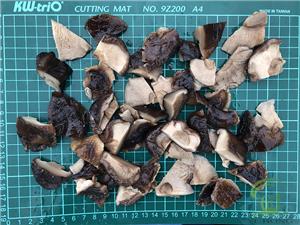
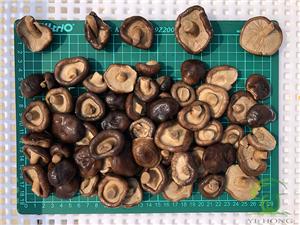
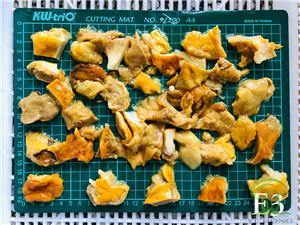
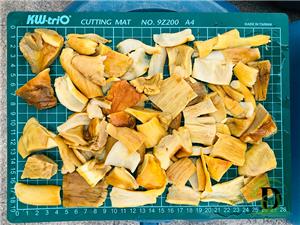
YIHONG states that its boletus products are sourced from local mushroom growers and that the company is located in Xiuyan, Anshan, Liaoning Province, China. Its current product range includes multiple Boletus Edulis In Brine grades, allowing buyers to compare different size specifications according to their application.
For an importer, however, the important question is not simply where the factory is located. The buyer should ask how the supplier manages raw materials, grading, processing, quality inspection, packaging, and repeat production.
Final Checklist Before Ordering
| Check | Completed? |
|---|---|
| Species and grade confirmed | □ |
| Size range confirmed | □ |
| Whole or cut format confirmed | □ |
| Drained weight confirmed | □ |
| Gross weight confirmed | □ |
| Drum specification confirmed | □ |
| Sample tested | □ |
| Application test completed | □ |
| MOQ confirmed | □ |
| Lead time confirmed | □ |
| Export documentation confirmed | □ |
Conclusion
Buying Brined Boletus Mushrooms in Drum is a commercial sourcing decision, not simply a price comparison. The right product should match the buyer's application, mushroom size requirements, processing process, packaging needs, and purchasing volume.
Drained weight, mushroom grade, size consistency, sample performance, packaging, shelf life, lead time, and supplier reliability all deserve attention before a large order is placed.
For importers and food manufacturers, the best approach is to define the required specification first and then compare suppliers using the same criteria.
If you are sourcing brined boletus mushrooms in drum for food manufacturing, wholesale distribution, sauce production, pizza ingredients, prepared foods, or another commercial application, provide your required mushroom size, estimated quantity, application, and destination port when requesting a quotation. A clear specification allows the supplier to recommend the appropriate product and prepare a more useful commercial offer.