How to Calculate the Real Cost of Brined Boletus Edulis for Your Factory
Introduction
When purchasing mushrooms for commercial food production, it is tempting to compare suppliers by the price printed on the quotation.
Supplier A offers one price.
Supplier B offers another.
The lower number appears to be the better deal.
But for food manufacturers, this approach can be misleading.
The actual cost of brined Boletus edulis is influenced by much more than the purchase price. Drained weight, transportation, labor, processing requirements, product yield, packaging and supply reliability can all affect the final cost of using the mushroom in production.
This is why professional procurement teams should calculate total usable cost, rather than simply comparing the price per drum.
1. Factory Price Is Only the Starting Point
Suppose a supplier quotes a price for one drum of Boletus edulis in brine.
At first glance, the calculation seems simple:
Drum price = purchasing cost
But the drum contains both mushroom and brine.
The buyer also needs to pay for:
Transportation
Import costs
Warehouse handling
Internal processing
Labor
Waste
Storage
Quality inspection
Therefore, the actual cost should be calculated after considering the complete supply chain.
A useful basic formula is:
Total landed cost = Product cost + Freight + Import-related costs + Handling
Then:
Usable mushroom cost = Total landed cost ÷ Usable drained mushroom weight
This provides a much more useful number for production planning.
2. Why Drained Weight Is So Important
Drained weight is one of the most important specifications when comparing brined mushroom suppliers.
The gross weight includes:
Mushrooms + brine + packaging
But your factory primarily needs the mushroom.
Therefore, when comparing two quotations, always ask for:
Gross weight
Drained weight
Packaging weight
YIHONG's A1 Boletus Edulis In Brine specification currently lists 45 kg drained weight per drum and approximately 65 kg gross weight per drum.
This information makes it possible to calculate the effective mushroom cost.
3. Example: Why the Cheapest Drum May Not Be Cheapest
Imagine two suppliers.
Supplier A
Drum price: $100
Drained weight: 40 kg
Effective product price:
$100 ÷ 40 kg = $2.50/kg
Supplier B
Drum price: $108
Drained weight: 45 kg
Effective product price:
$108 ÷ 45 kg = $2.40/kg
Supplier B has the higher drum price.
But Supplier B actually provides a lower cost per kilogram of drained mushroom.
This simple example shows why buyers should never compare drum prices without checking drained weight.
4. Add International Freight
For importers, transportation can significantly affect the final cost.
Your landed cost may include:
Factory-to-port transportation
Ocean freight
Port handling
Customs clearance
Inland transportation
Warehouse delivery
The exact cost depends on the destination and trade terms.
Therefore, when comparing suppliers from different countries or regions, compare the estimated landed cost rather than only the factory quotation.
5. Don't Ignore Internal Labor Costs
Labor is often overlooked in raw material purchasing.
Suppose your factory receives whole mushrooms that require:
Sorting
Trimming
Cutting
Washing or preparation
Portioning
These activities require workers, equipment and production time.
If another supplier can provide a mushroom format closer to your final production requirement, the purchase price may be slightly higher while the overall processing cost is lower.
This is particularly relevant for sliced Boletus edulis.
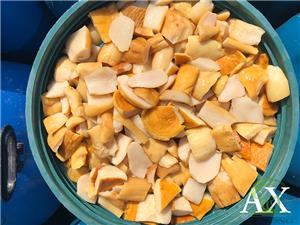
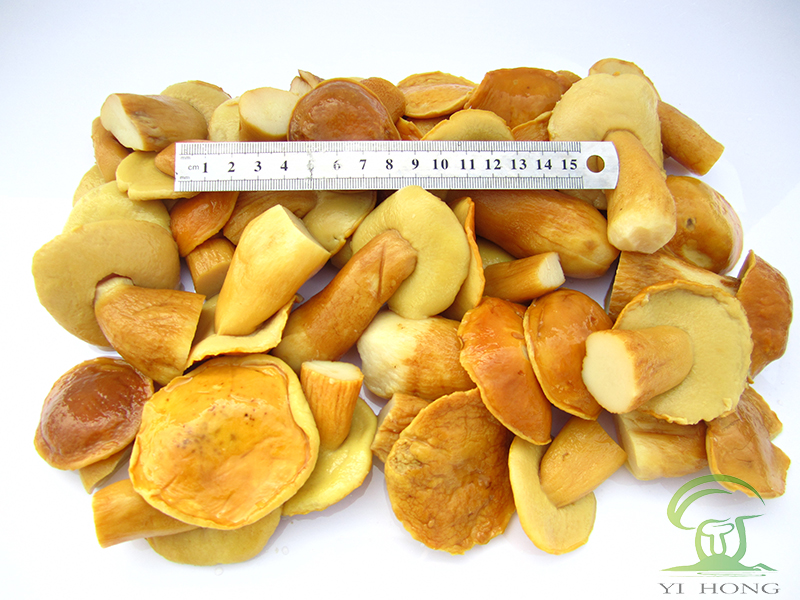
YIHONG currently offers sliced Boletus edulis in several listed size ranges, including 1–2 cm, 2–4 cm, 4–6 cm, 1–5 cm, 2–5 cm, 1–6 cm and 1–3 cm.
For a manufacturer that needs standardized pieces, this type of product can reduce some preparation work.
6. Calculate Processing Cost Per Kilogram
Suppose your production team spends 10 hours processing one batch of mushrooms.
The actual labor cost is not only the workers' hourly wages.
You may also need to consider:
Equipment
Electricity
Factory overhead
Supervision
Production downtime
Cleaning
Waste disposal
A more complete calculation is:
Processing cost = Labor + Equipment + Energy + Overhead + Waste handling
Then divide the total by the usable mushroom quantity.
This gives you the actual processing cost per kilogram.
7. Consider Mushroom Yield
Yield is another important factor.
If you buy a product that requires substantial sorting and trimming, the final usable quantity may be lower than the initial quantity received.
For example:
100 kg received → 90 kg usable
Your actual usable quantity is 90 kg, not 100 kg.
Therefore:
Actual cost per usable kilogram = Total cost ÷ 90 kg
This can be significantly higher than the nominal purchase price.
For food manufacturers, yield should therefore be included in supplier comparisons.
8. Consider the Cost of Inconsistent Product
Quality inconsistency can also create hidden costs.
Suppose one shipment contains mushrooms with significantly different sizes.
Your production team may need to:
Sort the product
Separate different sizes
Adjust recipes
Change processing times
Handle customer complaints
These activities may not appear on the supplier invoice, but they still cost your company money.
This is why consistency is a commercial factor, not only a quality factor.
9. Product Size Can Affect Total Cost
The cheapest grade is not necessarily the most economical grade.
Consider a sauce manufacturer.
If the final recipe requires small mushroom pieces, purchasing large whole mushrooms may create additional cutting work.
Now consider a restaurant supplier.
If the final dish requires visible mushroom pieces, very small pieces may not provide the desired appearance.
Therefore, the right product should be selected according to the final application.
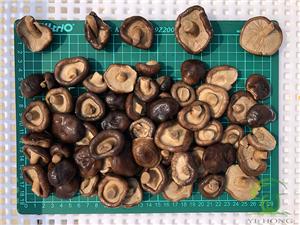
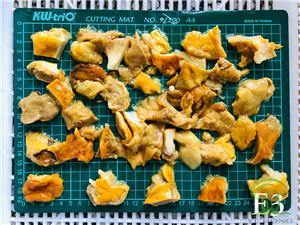
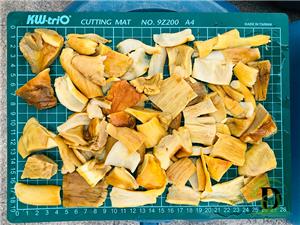
YIHONG currently offers multiple grades, including A1, A2, A3, B3, D and E3. Their listed size ranges vary, allowing buyers to consider different application requirements.
10. Calculate the Cost of Storage
Bulk purchasing can reduce purchasing frequency, but it can also increase inventory.
Before ordering a large quantity, consider:
Warehouse capacity
Storage conditions
Inventory turnover
Insurance
Handling
Capital tied up in stock
If a product sits in your warehouse for a long period, the financial cost of inventory should be considered.
The cheapest unit price may not be the best option if it creates excessive inventory.
11. Consider Minimum Order Quantity
MOQ can affect purchasing economics.
If your supplier requires a large minimum order, ask yourself:
Can my factory consume the product within the planned inventory period?
For a high-volume food manufacturer, a large MOQ may not be a problem.
For a smaller distributor, however, it may create unnecessary inventory pressure.
A good supplier should discuss order quantities according to the customer's actual purchasing situation.
12. Calculate Cost Per Finished Product
For manufacturers, an even better method is to calculate mushroom cost at the finished-product level.
Suppose one finished product uses 50 grams of usable Boletus edulis.
If your usable mushroom cost is $3/kg:
50 g × $3/kg = $0.15 mushroom cost per finished unit
Now you can evaluate whether a slightly higher mushroom purchase price materially affects your finished product.
This is particularly useful for:
Pizza manufacturers
Pasta producers
Sauce manufacturers
Ready-meal producers
Soup manufacturers
Canned food producers
13. Example for a Food Manufacturer
Imagine a factory needs 10 tons of usable Boletus edulis per month.
Supplier A provides:
Lower drum price
Lower drained weight
More internal processing required
Supplier B provides:
Slightly higher drum price
Higher drained weight
Product format closer to the production requirement
More consistent specification
Supplier B may appear more expensive during the initial purchasing comparison.
But after calculating:
Purchase + freight + labor + processing + waste
Supplier B may have a lower total production cost.
This is why professional procurement decisions should focus on total cost.
14. What Should Be Included in Your Supplier Comparison Sheet?
Create a table with the following fields:
| Cost Factor | Supplier A | Supplier B | Supplier C |
|---|---|---|---|
| Price per drum | |||
| Drained weight | |||
| Cost per drained kg | |||
| Freight | |||
| Import costs | |||
| Processing cost | |||
| Estimated waste | |||
| Storage cost | |||
| Total usable cost |
This approach gives your purchasing team a much more accurate picture.
15. Why Supplier Capacity Also Has a Cost
Supply interruptions can be expensive.
Imagine your factory needs Boletus edulis every month but your supplier cannot provide the agreed quantity.
You may need to:
Purchase from another supplier at a higher price
Delay production
Change your recipe
Adjust customer orders
Pay additional freight for emergency shipments
Therefore, supply capacity should be part of supplier evaluation.
YIHONG's current product pages list 150 tons/month supply capacity and approximately 20 days delivery time for several Boletus Edulis In Brine products.
For buyers planning regular imports, this information can be useful when discussing production schedules.
16. The Value of a Stable Supplier
A long-term supplier can create value beyond the product itself.
Once the specification is confirmed, a stable supplier relationship can make it easier to manage:
Repeat orders
Product specifications
Packaging
Production scheduling
Shipping arrangements
Quality expectations
This reduces the amount of time your purchasing team needs to spend searching for a new supplier for every shipment.
17. Questions to Ask When Comparing Quotations
Before choosing a supplier, ask:
Product
What is the exact grade?
What is the size range?
Is the product whole or sliced?
What is the drained weight?
Packaging
What is the gross weight?
What is the drum specification?
How many drums per container?
Supply
What is the MOQ?
What is the monthly capacity?
What is the lead time?
Can you support repeat orders?
Quality
Can you provide samples?
What inspection procedures are used?
How is drained weight verified?
How is size consistency controlled?
Commercial
What is the FOB price?
What is the CIF price?
What payment terms are available?
What documents can be provided?
18. Don't Forget Sample Testing
A sample is one of the best tools for evaluating the real cost of a mushroom product.
Test the sample in your actual production environment.
Measure:
Usable yield
Preparation time
Cooking performance
Final appearance
Texture
Recipe compatibility
Production labor
Then compare the results with your current supplier.
This gives you a much more meaningful answer than comparing quotations alone.
19. Why YIHONG's Product Range Can Help Buyers Compare Options
YIHONG currently offers several Boletus Edulis In Brine grades and formats, including A1, A2, A3, B3, D, E3 and other specifications, as well as sliced Boletus edulis.
This is useful when a buyer does not want a generic product.
Instead, the buyer can explain:
"We need Boletus edulis for pizza production."
or:
"We need a smaller mushroom format for sauce manufacturing."
The supplier can then discuss which available specification is most appropriate.
20. A Practical Purchasing Formula
For a food manufacturer, the following formula can be used:
Step 1
Calculate the product cost per drained kilogram.
Drum price ÷ drained weight
Step 2
Add transportation and import expenses.
Product cost + logistics
Step 3
Add internal processing.
Landed cost + labor + equipment + energy
Step 4
Adjust for usable yield.
Total cost ÷ usable mushroom quantity
Step 5
Calculate the cost in the finished product.
Usable mushroom cost × mushroom quantity per finished product
This gives you a much clearer understanding of the real economic value of the supplier's quotation.
Conclusion
The lowest quotation is not always the lowest-cost mushroom.
When purchasing brined Boletus edulis, food manufacturers should evaluate:
Price
Drained weight
Yield
Freight
Labor
Processing
Packaging
Storage
Quality consistency
Supply capacity
A professional purchasing decision should answer one question:
How much does this mushroom actually cost my factory after it becomes a usable ingredient?
Once you calculate the total cost, supplier comparisons become much more accurate.
Looking for a Competitive Brined Boletus Edulis Supplier?
YIHONG supplies multiple Boletus Edulis In Brine specifications for international food manufacturers, importers, wholesalers and foodservice businesses.
Current product information includes multiple grades, drum packaging, listed 45 kg drained weight per drum for several products, and supply capacity of up to 150 tons/month for the listed products.
If you are comparing suppliers, send us your current specification or purchasing requirement.
Please provide:
Product grade + size + whole/sliced + quantity + destination + application
Our team can provide the corresponding product information and quotation.
Request a sample or bulk quotation for brined Boletus edulis today.