Brined Boletus Edulis for Wholesale: How Distributors Can Choose the Right Product
Introduction
For food distributors and wholesale buyers, choosing the right mushroom product is not simply a matter of finding the lowest factory price.
A wholesale customer needs a product that can be purchased consistently, stored appropriately, transported efficiently and resold to different types of customers. The wrong specification can create problems throughout the supply chain, from customer complaints and inconsistent product quality to unnecessary inventory costs.
This is particularly important when purchasing brined Boletus edulis in bulk.
Boletus edulis, commonly known as porcini, is used in a wide range of food applications. However, different customers may require different mushroom sizes, grades, formats and packaging. A restaurant may care about appearance and piece size, while a food factory may pay more attention to drained weight, production consistency and supply capacity.
For wholesalers, the best purchasing strategy is therefore not to ask, "Which Boletus edulis product is cheapest?"
A better question is:
Which Boletus edulis specification provides the best combination of quality, usability, cost and supply stability for my customers?
This guide explains the main factors wholesalers should evaluate before purchasing brined Boletus edulis.
1. Understand What Your Customers Actually Need
Before contacting a supplier, a distributor should understand its downstream customers.
Your customers may include:
Food manufacturers
Restaurant suppliers
Catering companies
Pizza manufacturers
Pasta producers
Sauce manufacturers
Mushroom processors
Foodservice distributors
Importers
Retail food companies
These customers do not necessarily need the same product.
For example, a restaurant may prefer larger, visually attractive mushroom pieces because the mushroom will remain visible in the finished dish.
A sauce manufacturer may prefer smaller pieces or sliced Boletus edulis because the mushrooms need to be mixed with other ingredients.
A pizza manufacturer may have a specific piece size that fits its topping and portioning process.
Therefore, a wholesale distributor should avoid treating all Boletus edulis buyers as one customer group.
2. Choose the Right Product Grade
One of the biggest advantages of working with a supplier that has multiple grades is flexibility.
Different Boletus edulis grades can be matched to different applications.
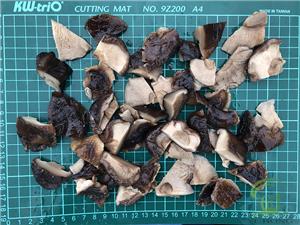
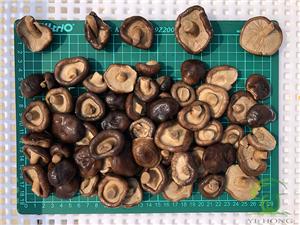
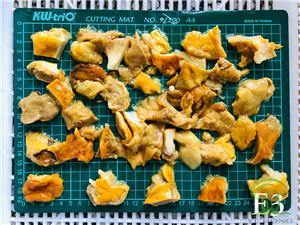
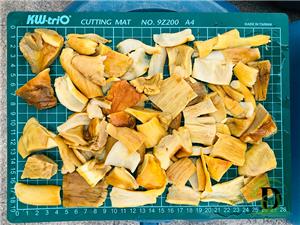
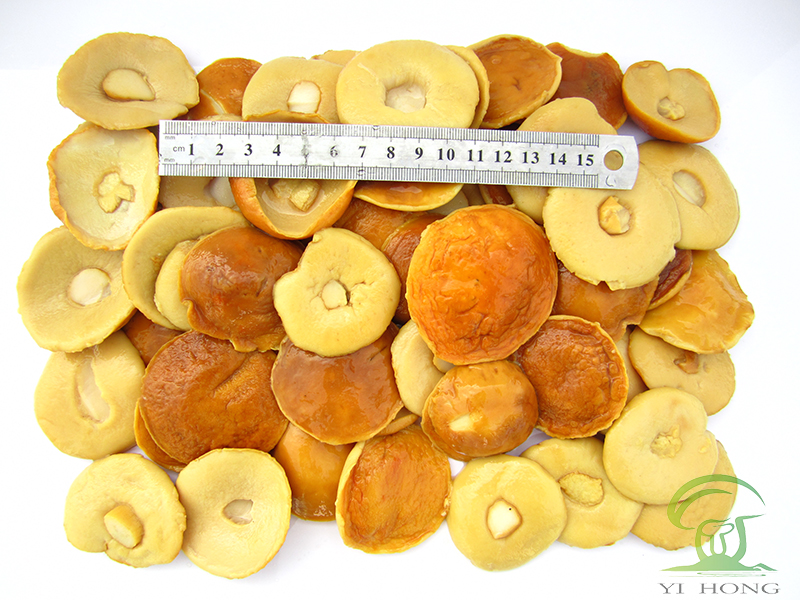
For example, YIHONG's current product range includes multiple grades such as A1, A2, A3, B3, D and E3. The listed specifications vary by product. A1 is currently listed at 1.2–2 cm, A2 at 1.6–3.5 cm, B3 at 4–6 cm, while E3 is listed at 1–5 cm.
This kind of product range can be useful for distributors because it allows them to serve multiple customer requirements instead of depending on a single specification.
When requesting a quotation, wholesalers should therefore specify whether they need:
A particular grade
A specific size
Whole mushrooms
Sliced mushrooms
Mixed size specifications
A regular monthly supply
3. Whole or Sliced Boletus Edulis?
Another important decision is whether your customers need whole mushrooms or sliced products.
Whole Boletus Edulis
Whole products may be suitable when the mushroom itself is an important visual element.
Potential applications include:
Restaurant dishes
Premium prepared foods
Mushroom toppings
Specialty food products
Certain canned products
The advantage is that the buyer retains more flexibility in how the mushrooms are subsequently prepared.
Sliced Boletus Edulis
Sliced mushrooms can be more convenient when the customer already knows the required piece format.
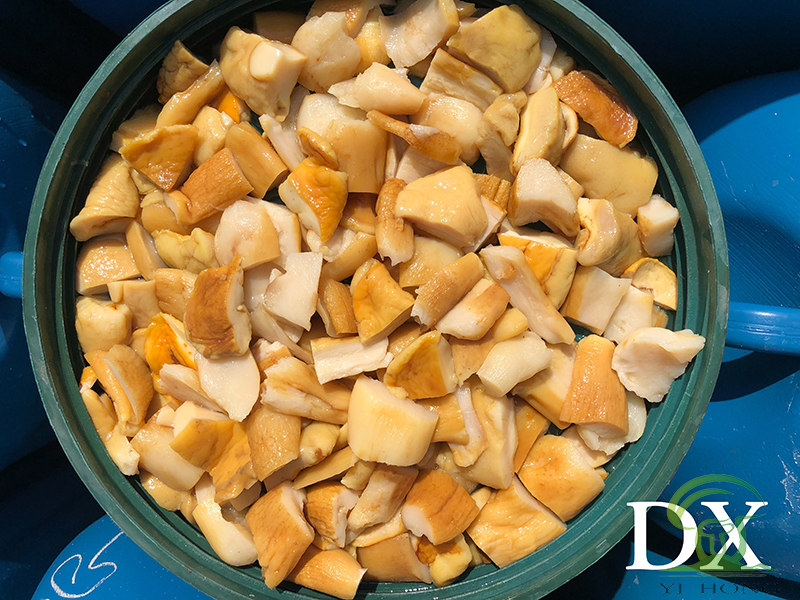
YIHONG currently lists Boletus Edulis In Brine Slices with several size options, including 1–2 cm, 2–4 cm, 4–6 cm, 1–5 cm, 2–5 cm, 1–6 cm and 1–3 cm.
For wholesale distributors, this can create another sales opportunity.
Instead of selling only one generic porcini product, a distributor can offer different formats according to customer applications.
4. Don't Compare Suppliers Only by Drum Price
This is one of the most important points for wholesale buyers.
A supplier may offer a lower price per drum, but that does not automatically mean the product is cheaper.
A brined mushroom drum contains both mushrooms and brine.
Therefore, buyers should compare:
Price per drum
and
Drained mushroom weight per drum
The second figure can provide a much better basis for comparison.
For example, YIHONG's A1 product currently lists a drained weight of 45 kg per drum and a gross weight of approximately 65 kg per drum.
A wholesaler can therefore calculate the effective cost per kilogram of drained mushroom.
The formula is simple:
Effective product cost = Drum price ÷ Drained weight
This is especially important when comparing quotations from several suppliers.
5. Consider the Landed Cost
Factory price is only one part of the wholesale purchasing cost.
The actual cost may include:
Product price + inland transportation + ocean freight + insurance + port charges + customs-related costs + warehouse handling
For importers and distributors, landed cost is much more important than factory price alone.
A supplier with slightly higher product pricing may still be more competitive if the packaging, loading efficiency, product yield and supply reliability are better.
This is why professional wholesale purchasing should focus on total cost rather than headline price.
6. Packaging Matters in Wholesale Distribution
Bulk mushroom packaging affects transportation and warehouse management.
Before placing an order, distributors should confirm:
Drum capacity
Gross weight
Drained weight
Packaging material
Number of drums per container
Loading method
Pallet requirements
Storage requirements
Labeling information
YIHONG's Boletus products are currently listed with drum packaging, with several product pages specifying 45 kg drained weight and approximately 65 kg gross weight per drum.
The exact specification should always be confirmed with the supplier for the product being quoted.
7. Think About Your Inventory Strategy
Wholesale distributors need to balance product availability with inventory cost.
Buying too little can cause stock shortages.
Buying too much can create unnecessary warehouse pressure.
Before ordering, estimate:
Average monthly sales
Seasonal demand
Customer order frequency
Lead time
Safety stock
Container quantity
Warehouse capacity
A supplier's production capacity is therefore an important consideration.
YIHONG's current Boletus Edulis product pages list a supply capacity of 150 tons/month and a delivery time of approximately 20 days.
For distributors considering regular purchasing, information like this can help with supply planning.
8. Ask About Repeat Supply
A wholesale distributor is not buying only one shipment.
The real value of a supplier is its ability to support repeat orders.
Before starting a long-term relationship, ask:
Can the supplier maintain the same grade?
Can the supplier maintain the same size specification?
What is the normal production lead time?
What is the monthly supply capacity?
Can the supplier support seasonal demand?
Can the supplier provide samples?
Can the supplier handle repeat container orders?
Consistency is particularly important when you have already introduced a product to your customers.
If your customer expects the same product in the next shipment, a significant change in specification can create problems for your business.
9. Evaluate Quality Before Buying in Bulk
A professional distributor should not rely entirely on photographs.
Request a sample before committing to a large order whenever possible.
During sample evaluation, check:
Appearance
Look at mushroom color, shape and general condition.
Size
Confirm that the actual size matches the quoted specification.
Texture
Evaluate whether the texture is suitable for your intended market.
Brine
Check the condition of the brine and the product after opening.
Drained Weight
Verify the usable mushroom quantity according to the agreed specification.
Application Performance
If possible, test the mushroom in the actual recipe or production process.
This last step is particularly valuable for food manufacturers.
10. Understand the Difference Between Customer Value and Factory Cost
A wholesale distributor needs to sell value to its customers.
For example, a food factory may not care whether a drum is the cheapest available option if the product creates additional labor costs.
Similarly, a restaurant may accept a higher product price if the mushroom provides better appearance and consistency.
Therefore, when building your product portfolio, consider:
What problem does this specification solve for my customer?
A distributor that understands this question can compete on more than price.
11. Build a Multi-Grade Boletus Product Portfolio
If your customer base is diverse, consider offering several specifications.
For example:
Small-size Boletus Edulis
Suitable for sauces, fillings and mixed food products.
Medium-size Boletus Edulis
Suitable for general foodservice applications.
Larger Boletus Edulis
Suitable for visible mushroom applications.
Sliced Boletus Edulis
Suitable for customers who want a ready-to-use mushroom format.
This portfolio approach can help distributors respond to more RFQs.
12. What Information Should You Include in an RFQ?
A vague inquiry such as:
"Please quote porcini mushrooms."
is unlikely to produce the most useful quotation.
Instead, provide:
Product: Brined Boletus Edulis
Grade: A1 / A2 / A3 / B3 / D / E3 / required specification
Format: Whole / sliced
Size: Required range
Packaging: Drum
Quantity: Number of drums or tons
Destination: Country and port
Application: Food processing / wholesale / restaurant
Purchasing Frequency: Trial order / monthly / quarterly
The more specific the inquiry, the easier it is for the supplier to recommend a suitable product.
13. Why Supplier Location and Raw Material Access Matter
Raw material availability can have a significant impact on supply.
YIHONG states that its Boletus products are sourced from local mushroom growers and that the company focuses on primary processing of agricultural products. Its factory is located in Xiuyan County, Anshan, Liaoning, China.
For importers, proximity to raw material sources can be relevant when evaluating:
Raw material availability
Production scheduling
Quality control
Processing efficiency
Supply continuity
However, buyers should still evaluate the actual product specification and supplier performance rather than relying on location alone.
14. Questions Wholesale Buyers Should Ask Before Placing an Order
Here is a practical checklist.
Product
What Boletus edulis grades are available?
What sizes are available?
Are whole and sliced formats available?
Can the specification be customized?
Packaging
What is the gross weight?
What is the drained weight?
How many drums fit in a container?
What packaging material is used?
Supply
What is the MOQ?
What is the lead time?
What is the monthly supply capacity?
Can repeat orders be supported?
Quality
Can you provide samples?
What quality inspection is performed?
How is size controlled?
How is drained weight checked?
Commercial
What is the FOB/CIF price?
What is the payment term?
What is the quotation validity?
What documents can be provided?
15. Why YIHONG Can Be Considered for Wholesale Supply
For wholesale buyers, supplier selection should be based on the complete purchasing requirement.
YIHONG currently offers a range of Boletus Edulis In Brine products rather than a single specification. The product range includes multiple grades and a sliced product line. Current product pages also list 150 tons/month supply capacity and approximately 20 days delivery time.
This product range can be useful for distributors that need to serve customers with different requirements.
Instead of asking a customer to accept whatever product is available, the distributor can first identify the application and then select the appropriate grade.
16. Start With a Sample, Then Move to a Bulk Order
For a new supplier relationship, a practical purchasing process is:
Step 1: Define your target specification.
Step 2: Request product photographs and specifications.
Step 3: Request a sample.
Step 4: Test the sample in your application.
Step 5: Confirm packaging and drained weight.
Step 6: Request a formal quotation.
Step 7: Start with a trial order.
Step 8: Evaluate the shipment.
Step 9: Establish a regular purchasing schedule.
This approach reduces risk while allowing both parties to understand the requirements.
Conclusion: Choose a Supplier That Can Support Your Business
Wholesale purchasing of brined Boletus edulis should not be based on one number.
The best supplier is the one that can provide the right combination of:
Product quality
Appropriate grades
Suitable sizes
Reliable packaging
Competitive landed cost
Stable production
Consistent supply
Clear communication
If you are building a wholesale mushroom business, importing porcini for foodservice customers or sourcing Boletus edulis for food manufacturing, selecting the correct specification is the first step.
YIHONG supplies multiple Boletus edulis in brine specifications for international B2B customers.
Request a Wholesale Quotation
Tell us:
1. Product grade or size
2. Whole or sliced
3. Required quantity
4. Packaging requirement
5. Destination port
6. Intended application
Our team can provide the corresponding product specification and quotation.
Looking for a reliable supplier of brined Boletus edulis? Send your requirements to YIHONG today and start with a product sample or bulk quotation.