Salted, Dried, Or Quick-Frozen – Which Form of Shiitake Mushroom Should You Choose When Purchasing?
International food buyers often encounter a perplexing issue when sourcing shiitake mushrooms: why are there such large price differences even for the same product? One reason is the different processing methods. Dried, quick-frozen, and salted shiitake mushrooms involve completely different processes, storage and transportation conditions, and usage logic. Understanding this before inquiring about prices can save a lot of trouble later.
The Basic Differences Between the Three Forms
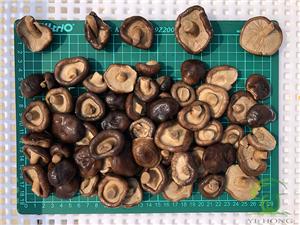
Dried shiitake mushrooms
This involves drying fresh shiitake mushrooms to a moisture content of less than 13%. The advantages are light weight, room temperature storage, long shelf life (12–24 months), and low transportation costs. The disadvantages are that they need to be soaked for several hours before use, their shape may change, and there are significant differences in quality – products labeled "dried shiitake mushrooms" can vary greatly in quality, requiring sufficient discernment when purchasing.
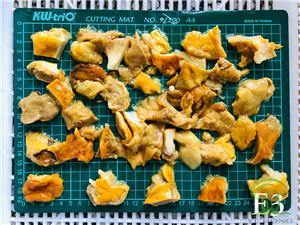
Quick-frozen shiitake mushrooms
This method involves rapidly freezing fresh goods at extremely low temperatures to preserve their shape and texture to the greatest extent possible. The goods are ready to use immediately after thawing, offering high convenience. The disadvantages are that it relies entirely on a cold chain (uninterrupted at -18℃). Sea freight from Asia to Europe and America typically takes 25–40 days, and any disruption to the cold chain can result in the loss of the entire shipment. Refrigerated container shipping costs are also significantly higher than regular dry cargo transport, resulting in higher overall landed costs.
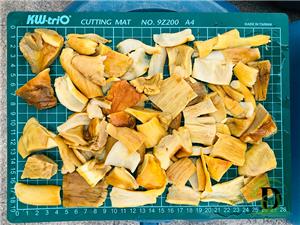
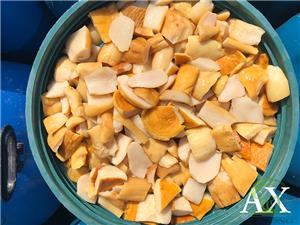
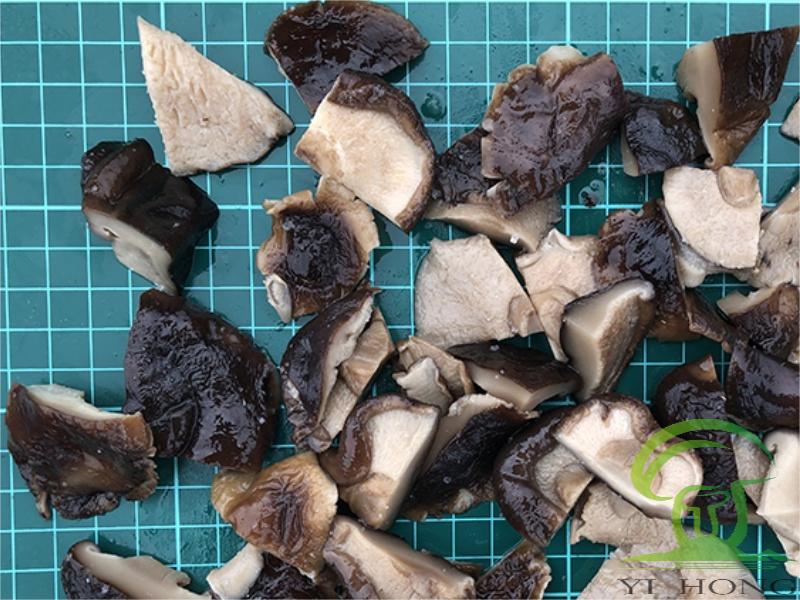
This involves pre-cooking fresh produce and then storing it in a high-salt solution. The high salinity itself has a preservative effect, allowing for a shelf life of 12–18 months without relying on freezing. The produce retains more of its original shape than dried produce, and only requires soaking and rinsing in water to remove salt before use. For food processing companies, this step can be directly integrated into the cleaning process without adding any additional burden.
How should different buyers choose?
Food processing companies (prepared food packages, canned goods, sauces, ready-to-eat meals):
Fresh shiitake mushrooms in brine are the most suitable option. Storage doesn't require refrigeration facilities, transportation uses standard containers, and supply stability is easier to guarantee—suppliers can centrally stock up during the production season, achieving stable delivery throughout the year, unaffected by seasonal fluctuations.
Restaurant chains or central kitchens:
Frozen shiitake mushrooms offer convenience, but this requires a robust cold chain system. For scenarios with wide delivery ranges and high cold chain management costs, salted shiitake mushrooms are a more reliable alternative, especially suitable for distribution from multiple warehouses.
Food distributors
The ambient temperature storage characteristics of salted shiitake mushrooms allow for more flexible inventory management and transportation, freeing them from the constraints of cold chain logistics. This flexibility is particularly valuable for distributors whose downstream customers are diverse catering businesses, especially during peak season demand fluctuations.
Premium retail or high-end ingredient supply
Dried shiitake mushrooms hold an irreplaceable position in this market, but the quality of the raw materials is crucial. Suppliers with clear grading standards and traceability must be selected to avoid customer complaints due to inconsistent quality.
Regarding YIHONG's fresh shiitake in brine:
YIHONG specializes in exporting brine-cured shiitake mushrooms, with a monthly supply capacity of 150 tons. We hold a health registration certificate and export license from the Entry-Exit Inspection and Quarantine Bureau.
The raw materials are processed directly from fresh harvesting, ensuring extremely short intervals between harvesting and salting, guaranteeing the quality of the raw materials. The brine is packaged in drums suitable for standard container shipping, reaching Europe, North America, and Southeast Asia via long-distance sea freight at ambient temperature, ensuring stable and controllable product condition.
A monthly capacity of 150 tons means our factory has the ability to prepare inventory in advance to meet buyers' periodic large-volume demands, rather than relying on real-time procurement to meet demand.