Brined vs. Dried vs. Frozen: Which Mushroom Format Wins the 2026 Industrial Efficiency Race?
1. Introduction: The Ingredient Dilemma in 2026
In the fast-paced food manufacturing sector of 2026, selecting the right raw material format is no longer just about flavor—it’s about operational throughput. As global labor costs reach new heights and energy-intensive processes face heavy carbon taxation, food processors must choose between Brined, Dried, and Frozen mushrooms.
2. Brined vs. Dried Mushrooms: The Hidden Labor Trap
For decades, dried mushrooms were the staple for long-term storage. However, in 2026, the "Hidden Labor Cost" of rehydration has become a deal-breaker for industrial kitchens.
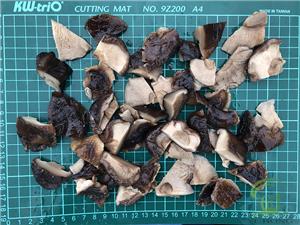
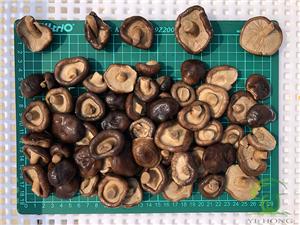
Prep-Time Analysis: Dried mushrooms require 4–12 hours of soaking. This requires massive floor space for soaking vats and manual labor to monitor rehydration levels. Brined mushrooms from BrinedFungi.com are "Ready-to-Use" (RTU), saving an average of 14 labor hours per ton of processed product.
Texture Recovery: Dried mushrooms often suffer from "lignification"—a woody texture that never truly disappears. Our brining process in 2026 uses controlled osmotic pressure, which keeps the mushroom’s cell walls flexible, resulting in a snap and bite that is indistinguishable from fresh.
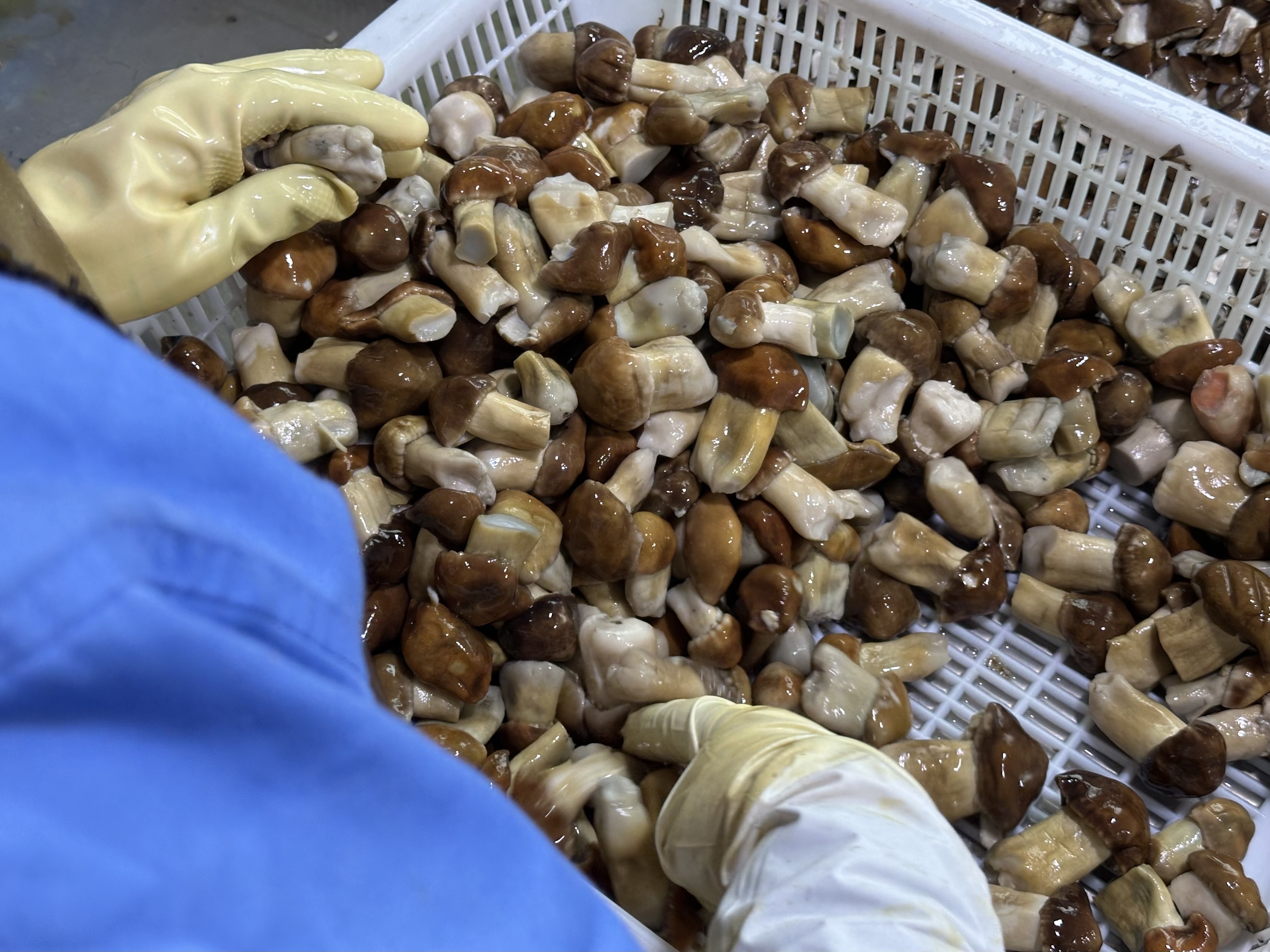
The Sand & Grit Factor: Rehydrating dried mushrooms often leaves residual grit in the gills. Our brined mushrooms undergo a Triple-Stage Ultrasonic Wash before packing, ensuring 99.9% purity for high-speed canning lines.
3. Brined vs. Frozen Mushrooms: The Science of Cellular Integrity
While frozen mushrooms seem convenient, the 2026 energy crisis and "Drip Loss" issues have shifted the balance toward brined.
The "Ice Crystal" Problem: Freezing creates sharp ice crystals that puncture the mushroom's delicate cell membranes. Upon thawing, the mushroom "weeps" (drip loss), losing up to 20% of its weight and most of its umami-rich juices.
The Brine Advantage: Brined mushrooms are preserved in a salt solution that stabilizes the proteins. When cooked, our mushrooms retain their shape and volume. For a pizza manufacturer, this means a "Fuller Topping Look" with less raw material.
Energy Footprint: Storing frozen mushrooms at -18°C is 400% more energy-intensive than storing brined drums at ambient or chilled (5°C) temperatures. With the 2026 Global Carbon Tax in full effect, switching to brined can save your company thousands in environmental levies.
4. Brined vs. Canned: Beyond the "Retort" Taste
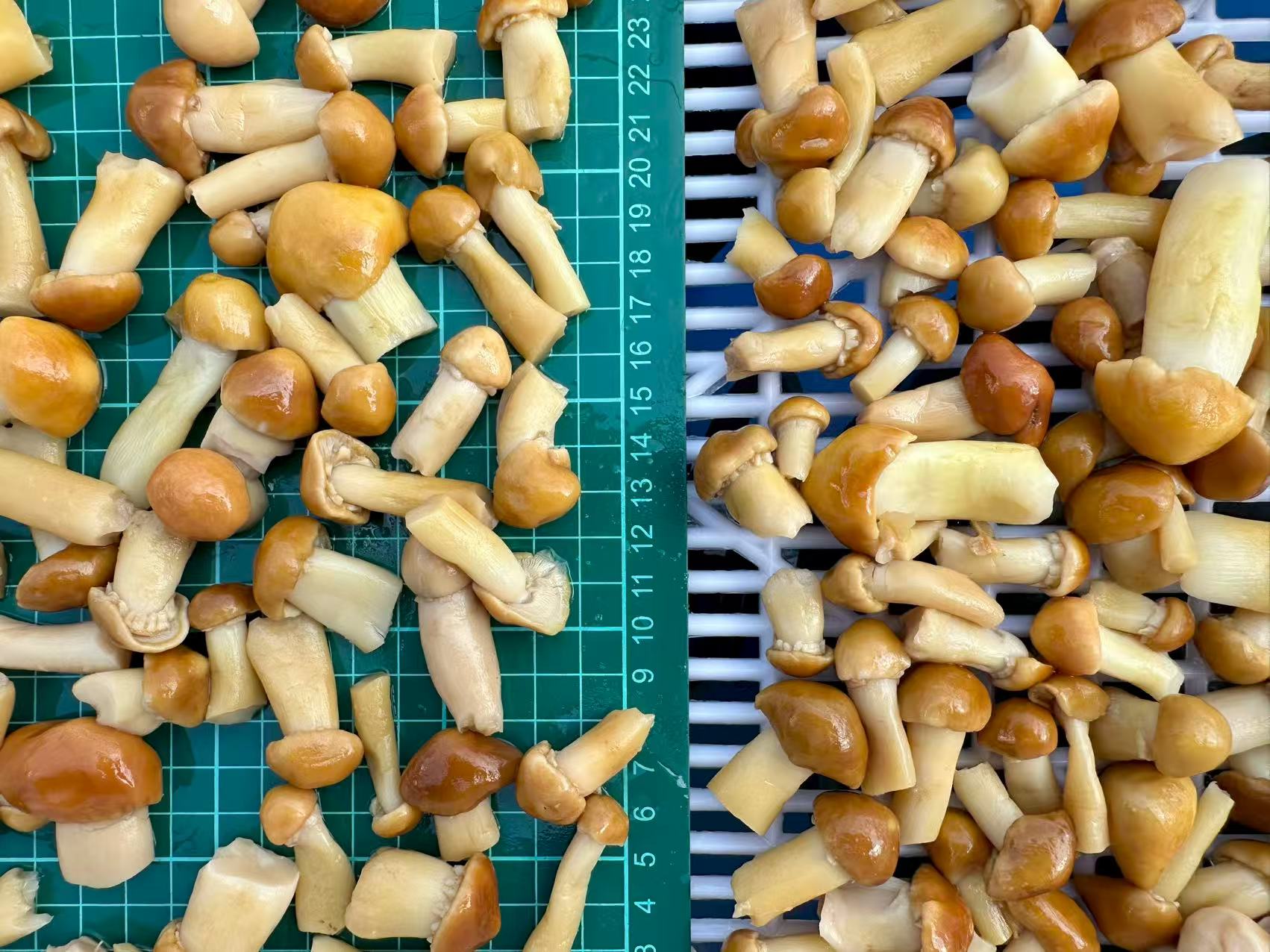
Traditional canned mushrooms undergo high-pressure retort sterilization, which often "overcooks" the product, leading to a mushy texture and a distinct metallic off-flavor.
Clean Label Appeal: Consumers in 2026 demand "Clean Labels." Our brined mushrooms contain only three ingredients: Mushrooms, Water, and Sea Salt (with optional Citric Acid). No complex preservatives or stabilizers found in many canned varieties.
5. Economic & Sensory Verdict (2026 Scorecard)
| Feature | Dried | Frozen | Canned | |
| Low | Medium | Low | ||
| 8-12 hrs | 2-4 hrs | Instant | Instant | |
| Low | Very High | Medium | ||
| Concentrated | Diluted | Metallic | ||
| High | Low | Medium |
The Winner for 2026
For industrial-scale pizza producers, soup manufacturers, and ready-meal brands, Brined Mushrooms are the clear winner. They offer the perfect synergy of shelf-stability, fresh texture, and zero-prep labor.
Ready to see the difference?