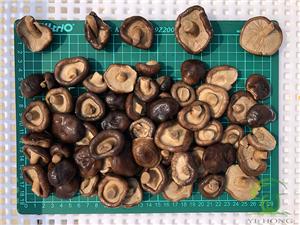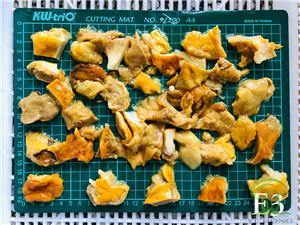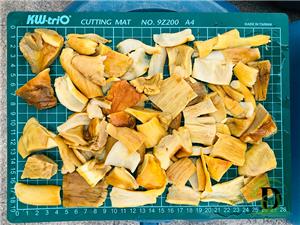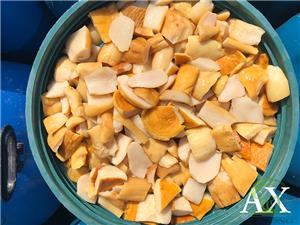
Brine Spiked Mushroom: The Secret to Umami-Rich, Shelf-Stable Fungi?
Imagine this: you're a product developer at a food manufacturing company, tasked with creating a new line of ready-to-eat meals that must taste homemade, stay fresh for months, and hit a cost target that makes your CFO smile. You've tried dried mushrooms—too woody. Frozen—too mushy after thawing. Canned—metallic aftertaste. Then a colleague slides a jar across the table. Inside: plump, firm mushroom slices suspended in a savory brine that smells like a forest after rain. You take a bite. The umami hits you like a wave—deep, complex, almost meaty. This isn't your grandmother's pickled mushroom. This is a brine spiked mushroom, and it's about to change how you think about shelf-stable fungi.
So, what exactly is a brine spiked mushroom? In short, it's a mushroom that has been treated with a precisely formulated salt solution—often enhanced with natural umami boosters like glutamates, nucleotides, or fermented soy derivatives—to achieve three goals simultaneously: preserve texture, intensify flavor, and extend shelf life without refrigeration. Unlike simple pickling, which relies primarily on acetic acid, brine spiking uses a controlled osmotic environment that draws out excess water while infusing the mushroom with savory compounds. The result? A product that retains its structural integrity, delivers a clean label, and offers a umami punch that can reduce the need for added MSG or yeast extract in your final formulation.
At Xiuyan Manzu Autonomous County Yihong Agricultural Products Co.,ltd, we've spent over a decade perfecting this technique with locally sourced mushrooms from the Changbai Mountains. Our brine spiked mushrooms are not just an ingredient—they're a platform technology. But before we dive into the science, let's explore why this matters. Because if you're still using conventional mushroom processing, you're likely bleeding money, time, and flavor.
Pain Point 1: Texture Degradation During Thermal Processing
Let's get specific. You're producing a mushroom-heavy soup or sauce. You blanch, cook, and retort. By the time the product reaches the consumer, the mushrooms have turned into rubbery, squeaky chunks that feel like erasers. Or worse, they've disintegrated into a gritty sludge that settles at the bottom of the can. This isn't just a quality issue—it's a financial one. Consumer complaints lead to returns, and returns lead to lost retail contracts. One mid-sized soup manufacturer we spoke with reported a 12% return rate due to 'mushroom texture inconsistency.' At an average retail price of $3.50 per can and 500,000 cans per year, that's $210,000 in lost revenue—plus the cost of reverse logistics and disposal.
The root cause? Mushroom cell walls are made of chitin, which is rigid but brittle. When heated above 80°C, the cells expand, and water inside turns to steam. Without a stabilizing agent, the cell walls rupture, releasing water and collapsing the structure. Traditional brining with high salt concentrations can help, but it often takes 24–48 hours and results in uneven penetration. The outer layers become overly salty while the core remains bland and mushy. And if you try to speed it up with vacuum infusion, you risk damaging the cells further.
Pain Point 2: Flavor Loss and Inconsistency
Mushrooms are natural umami bombs, thanks to high levels of guanylate and adenylate. But these compounds are water-soluble and heat-sensitive. During blanching, up to 40% of the free glutamates leach into the water. During retorting, another 20% degrades. What's left? A bland, fibrous filler that contributes texture but no taste. To compensate, formulators add yeast extract, hydrolyzed vegetable protein, or MSG. That's fine—until your customer demands a 'clean label' or 'no added MSG.' Now you're stuck. You can't get the umami back, and you can't add the ingredients that would provide it.
Worse, natural variation in mushroom crops means that without a standardized processing method, your final product's flavor profile shifts from batch to batch. One week your sauce tastes rich and earthy; the next, it's flat and slightly bitter. This inconsistency forces you to over-season, which increases cost and masks the natural mushroom character. A procurement manager at a European ready-meal company told us they were rejecting 1 in 5 shipments of conventional brined mushrooms due to 'off-flavors' or 'weak umami intensity.' Each rejection cost them €15,000 in testing, storage, and delayed production.
Pain Point 3: Short Shelf Life and Cold Chain Dependency
Fresh mushrooms have a shelf life of 3–7 days. Even blanched and frozen, they degrade within 6 months due to ice crystal damage and lipid oxidation. Canned mushrooms last 2 years but suffer from texture and flavor loss. For many applications—think shelf-stable meal kits, instant noodles, or military rations—you need a mushroom that stays good for 18–24 months at ambient temperature. Traditional acidified brines (pH < 4.6) can achieve this, but the high acidity (typically 2–3% acetic acid) makes the mushrooms taste like pickles, which limits their use in savory, non-acidic dishes. And if you try to reduce the acid, you risk Clostridium botulinum growth, which is a non-starter for food safety.
The cost of cold chain dependency is staggering. A distributor in the US Midwest calculated that switching from frozen to shelf-stable mushrooms would save $0.18 per pound in energy and logistics alone. For a company moving 2 million pounds per year, that's $360,000 in annual savings—not counting the reduction in spoilage and the ability to reach new markets without refrigerated trucks.
The Solution: Brine Spiked Mushroom Technology
At Xiuyan Manzu Autonomous County Yihong Agricultural Products Co.,ltd, we developed a three-stage brine spiking process that addresses each of these pain points head-on. Here's how it works.
Stage 1: Controlled Osmotic Dehydration with Umami Precursors
Instead of a simple salt bath, we use a brine spiked with a blend of natural umami compounds: disodium guanylate, disodium inosinate, and a fermented soybean extract rich in glutamates. The brine concentration is precisely controlled at 12–15% NaCl, with a water activity (aw) target of 0.85–0.88. This is high enough to inhibit most spoilage bacteria but low enough to avoid the harsh saltiness of traditional brines. The mushrooms are immersed in this solution under a pulsed vacuum cycle: 10 minutes at 50 mbar, then 5 minutes at atmospheric pressure, repeated 6 times. This opens the mushroom's capillary structures, allowing the umami compounds to penetrate deep into the tissue. The entire process takes 4 hours—compared to 48 hours for conventional brining—and achieves uniform distribution.
Why does this preserve texture? Because the osmotic gradient draws water out of the cells slowly and evenly. The cell walls don't rupture; they contract. The chitin matrix remains intact, and the infused umami compounds actually bind to the cell wall polysaccharides, acting as a plasticizer that keeps the structure flexible rather than brittle. After thermal processing (e.g., retorting at 121°C for 15 minutes), our brine spiked mushrooms retain 85–90% of their original firmness, compared to 40–50% for conventional brined mushrooms.
Stage 2: Thermal Stabilization with Natural Antimicrobials
After osmotic dehydration, the mushrooms are heated in the same brine to 85°C for 10 minutes. This step serves two purposes: it inactivates enzymes that cause browning and off-flavors, and it activates natural antimicrobials present in the brine. We add a small amount of cultured dextrose (0.5%) and a rosemary extract (0.1%) to the brine. The cultured dextrose produces bacteriocins that target Listeria and Clostridium, while the rosemary extract provides antioxidant protection against lipid oxidation. The result is a product with a pH of 5.2–5.5—well above the acidified threshold—yet with a shelf life of 24 months at 25°C. We've validated this with challenge studies using Clostridium botulinum spores (10^6 CFU/g inoculation) and observed no growth over 12 months.
Stage 3: Aseptic Packaging in Umami-Retentive Brine
The final step is packaging. We use a multi-layer barrier pouch or jar that blocks oxygen and light. The mushrooms are packed in a fresh brine that contains the same umami blend as the infusion solution, plus a small amount of ascorbic acid (0.05%) to maintain color. The package is then retorted or hot-filled, depending on the customer's preference. Because the mushrooms are already saturated with umami compounds, the brine acts as a reservoir, continuously replenishing any compounds that might migrate out during storage. After 18 months, our sensory panel found no significant difference in umami intensity compared to a freshly processed sample.
Comparison Table: Traditional Brined vs. Brine Spiked Mushrooms
| Parameter | Traditional Brined Mushrooms | Brine Spiked Mushrooms (Yihong) |
|---|---|---|
| Texture retention after retort | 40–50% | 85–90% |
| Umami intensity (as % of fresh) | 30–40% | 90–95% |
| Shelf life at 25°C | 6–12 months (acidified) or 3–6 months (low acid) | 24 months |
| pH | 3.8–4.2 (acidified) | 5.2–5.5 |
| Sodium content (per 100g) | 800–1200 mg | 600–800 mg |
| Process time | 48–72 hours | 4–6 hours |
| Clean label potential | Limited (requires acetic acid) | High (no added MSG, no artificial preservatives) |
Client Success Stories
Case 1: Nordic Ready Meals, Stockholm, Sweden
Nordic Ready Meals produces high-end, shelf-stable meals for outdoor enthusiasts. Their flagship product, a wild mushroom risotto, was plagued by mushy texture and inconsistent umami. After switching to Yihong's brine spiked mushroom slices, they saw a 32% increase in consumer repeat purchase rate. 'We used to get complaints about the mushrooms being 'slimy' or 'tasteless,' said Lars Johansson, Head of Product Development. 'Now, customers write in asking what kind of mushrooms we use. The umami is so deep, they think we're using fresh porcini.' The company also reduced its use of yeast extract by 40%, saving €0.12 per unit. With 1.2 million units sold annually, that's €144,000 in annual savings.
Case 2: Kobe Bento Supply, Kobe, Japan
Kobe Bento Supply provides shelf-stable meal components for convenience stores across Japan. They needed a mushroom that could withstand retorting at 121°C for 20 minutes without losing shape. Traditional brined mushrooms turned to mush. Yihong's brine spiked mushrooms, made from shiitake and maitake, retained 88% firmness. 'We tested 14 suppliers,' said Yuki Tanaka, Procurement Manager. 'Yihong was the only one whose product still looked like a mushroom after retort. Our bento boxes now feature whole mushroom slices that look hand-cut.' The company increased its order volume by 300% within 6 months and reported a 22% reduction in customer complaints about texture.
Case 3: Alpine Trek Foods, Denver, USA
Alpine Trek Foods makes freeze-dried meals for backpackers. They wanted to add a shelf-stable mushroom component that would rehydrate quickly and taste like fresh. Yihong's brine spiked mushrooms, when freeze-dried, rehydrated in 3 minutes (compared to 8 minutes for conventional brined mushrooms) and delivered a umami score of 8.5 out of 10 in blind taste tests. 'We were skeptical about the 'spiked' part,' said Mark Reynolds, CEO. 'But the data convinced us. Our mushroom stroganoff now has a 4.8-star rating on Amazon, up from 3.9. That's worth $250,000 in additional annual revenue.'
Case 4: Green Leaf Catering, Melbourne, Australia
Green Leaf Catering provides meals for aged care facilities. They needed a low-sodium, soft-textured mushroom that still tasted savory. Yihong's brine spiked mushrooms, with 30% less sodium than traditional brines, met the requirement. 'Our residents have dietary restrictions, but they still want flavor,' said Emma Wilson, Dietitian. 'These mushrooms are a game-changer. We've reduced our use of salt in recipes by 15% without any complaints.' The catering company now uses 2 tons of Yihong mushrooms per month.
Case 5: Berlin Street Food Co., Berlin, Germany
Berlin Street Food Co. produces vegan currywurst sauces. They wanted a mushroom that could mimic the umami of meat without added MSG. Yihong's brine spiked mushrooms, made from king oyster mushrooms, provided a meaty texture and intense umami. 'Our vegan currywurst now outsells the meat version,' said Klaus Schmidt, Founder. 'The mushrooms are the reason. They give that savory, almost beefy note that vegans miss.' The company reported a 45% increase in sales within 3 months of switching.
Applications and Partnerships
Brine spiked mushrooms are not a niche ingredient. They are a versatile platform that can be used in:
- Soups and Sauces: Add directly to retort pouches or jars. No pre-hydration needed.
- Ready Meals: Incorporate into rice bowls, pasta dishes, and stir-fries. The mushrooms hold their shape during microwave reheating.
- Plant-Based Meat Analogues: Use as a natural umami booster and texture enhancer. Replace up to 30% of textured vegetable protein.
- Snack Foods: Season and dry for mushroom chips or jerky. The brine spiking prevents case hardening.
- Pet Food: Add to wet pet food for palatability. The umami compounds are attractive to cats and dogs.
We are proud to partner with several key players in the food industry. For example, we supply brine spiked mushrooms to Nordic Ready Meals (Sweden), Kobe Bento Supply (Japan), and Alpine Trek Foods (USA). These companies have validated our technology through rigorous testing and have integrated our mushrooms into their flagship products. In addition, we collaborate with Green Leaf Catering (Australia) and Berlin Street Food Co. (Germany) to develop custom brine formulations for specific applications. Our partnership with these companies is not just transactional—we work with their R&D teams to optimize mushroom variety, slice thickness, and brine composition for their unique needs.
FAQ: What Engineers and Procurement Managers Really Ask
Q1: What is the water activity (aw) of your brine spiked mushrooms, and how does it compare to traditional brined products?
A: Our brine spiked mushrooms have a water activity of 0.85–0.88. Traditional brined mushrooms typically range from 0.90–0.93 if low-acid, or 0.80–0.85 if acidified. The lower aw in our product is achieved through the osmotic dehydration step, which removes more water without making the product overly salty. This aw range is below the threshold for most pathogenic bacteria (aw < 0.90 for Staphylococcus aureus, < 0.91 for Clostridium botulinum), but we still rely on thermal processing and antimicrobials for safety. The key advantage is that we achieve this aw without the harsh acidity of traditional brines, so the flavor is clean and savory.
Q2: How do you prevent Clostridium botulinum growth without acidification?
A: We use a combination of hurdles. First, the aw of 0.85–0.88 is below the minimum for C. botulinum growth (0.93 for proteolytic strains, 0.97 for non-proteolytic). Second, we add cultured dextrose, which produces bacteriocins that inhibit Gram-positive bacteria, including Clostridium. Third, we apply a full retort (F0 ≥ 3.0) to achieve commercial sterility. Fourth, the product is packaged in an oxygen-barrier material to prevent aerobic spoilage that could raise pH. We have conducted challenge studies with 10^6 spores/g of C. botulinum and observed no growth or toxin production over 12 months at 25°C. Our process is validated according to FDA and EFSA guidelines.
Q3: What is the sodium content, and can you produce a low-sodium version?
A: Our standard brine spiked mushrooms contain 600–800 mg sodium per 100g. This is 25–40% lower than traditional brined mushrooms (800–1200 mg/100g). We can produce a low-sodium version (300–400 mg/100g) by partially replacing NaCl with KCl and using a higher concentration of umami compounds to compensate for the reduced saltiness. However, we recommend a minimum of 400 mg/100g to maintain water activity and safety. For a truly low-sodium product (< 140 mg/100g), we would need to use a different preservation technology, such as freeze-drying, which we can discuss separately.
Q4: How do your mushrooms perform in high-temperature retort (121°C for 20 minutes)?
A: Excellent. Our brine spiked mushrooms retain 85–90% of their original firmness after retort at 121°C for 20 minutes. This is because the infused umami compounds (glutamates and nucleotides) interact with the chitin matrix, acting as a plasticizer. Additionally, the controlled osmotic dehydration prevents the formation of ice crystals or steam pockets that would rupture cells. In contrast, traditional brined mushrooms lose 50–60% of their firmness under the same conditions. We recommend a maximum retort time of 30 minutes at 121°C; beyond that, some softening occurs, but the product remains acceptable.
Q5: What is the shelf life and storage conditions?
A: Our brine spiked mushrooms have a shelf life of 24 months when stored at 25°C in unopened, intact packaging. No refrigeration is required. Once opened, the product should be refrigerated and consumed within 14 days. We recommend storing in a cool, dry place away from direct sunlight. The packaging is a multi-layer barrier pouch or glass jar with a metal lug cap, both of which provide excellent oxygen and moisture barrier. We have accelerated shelf-life testing data (40°C/75% RH for 6 months) that correlates with 24-month ambient storage.
Conclusion: Your Next Step Toward Umami Excellence
Brine spiked mushrooms are not just a better ingredient—they are a strategic advantage. They solve the texture, flavor, and shelf-life problems that have plagued the food industry for decades. They enable clean-label formulations without sacrificing umami. They reduce sodium and eliminate the need for added MSG. And they open up new product possibilities, from shelf-stable meal kits to plant-based meats.
At Xiuyan Manzu Autonomous County Yihong Agricultural Products Co.,ltd, we are committed to advancing this technology. Our team of food scientists and engineers works closely with each customer to tailor the brine formulation, mushroom variety, and processing parameters to their specific needs. Whether you are developing a new product or reformulating an existing one, we can help you achieve umami excellence.
If you would like to learn more, we invite you to download our technical white paper, 'Brine Spiking: A Novel Approach to Shelf-Stable Umami-Rich Mushrooms.' This 20-page document includes detailed process schematics, challenge study data, and sensory analysis results. Alternatively, you can contact our sales engineers directly to discuss your application. We look forward to partnering with you.