The Truth About Sand-Free Salted Boletus Edulis: A Wholesaler’s Quality Control Guide
Why grit is the #1 problem in wild mushroom imports and how our 5-step washing process guarantees industrial-grade purity for canneries and food processors.
The "Gritty" Reality of Wild Mushrooms:
For industrial food processors, nothing destroys a batch of premium mushroom soup or pasta sauce faster than customer complaints about "sand" or "grit."
As a buyer, you know that Boletus edulis (Porcini) is 100% wild-harvested. It grows in soil, pine needles, and dust. Therefore, the difference between a "cheap" supplier and a "reliable" partner isn't just the price—it's the cleaning technology.
In this post, we reveal how we achieve <0.01% impurity rates in our bulk Salted Boletus Edulis, ensuring your production line runs smoothly without sedimentation issues.
Why is Sand Removal So Difficult?
Wild Porcini mushrooms have a sponge-like layer under the cap (the hymenium). As the mushroom matures, these pores open up, trapping fine sand and soil deep inside where normal rinsing cannot reach.
If a supplier simply dips the mushrooms in brine without a specialized cleaning process, that sand remains hidden until your customer bites into it.
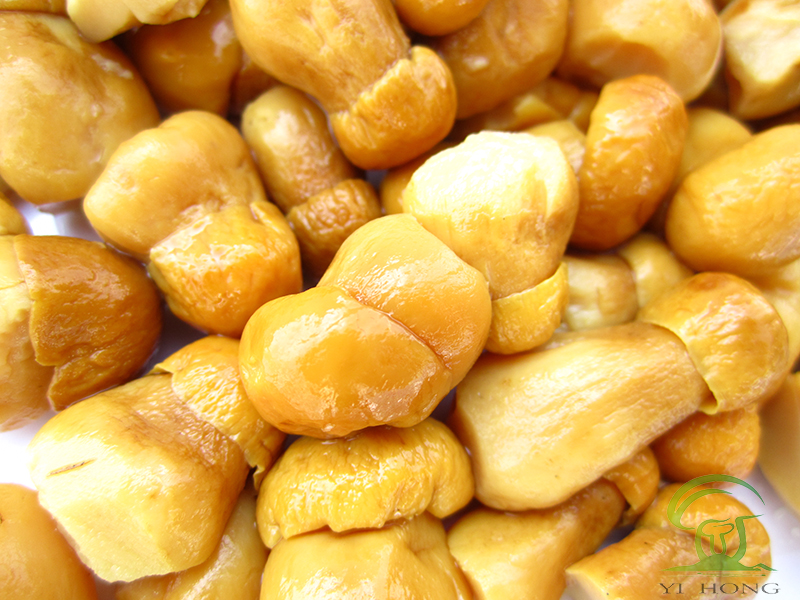
Our 5-Step "Zero-Grit" Processing Standard:
To satisfy strict hygiene standards for export to Europe and the USA, we utilize a combination of mechanical physics and manual labor.
1. Raw Material Sorting (The First Line of Defense):
We prioritize purchasing "Grade A" raw materials with closed or semi-closed caps. Open caps (mature mushrooms) trap 300% more sand than closed buttons. By filtering at the source, we reduce the risk significantly.
2. High-Pressure Air Blowing:
Before any water touches the mushroom, we use high-pressure air blowers to remove loose soil, leaves, and pine needles from the dry mushroom surface.
3. The Density Flotation Wash (Key Step):
This is our core technology. We do not just wash with water; we use a high-salinity brine circulation system.
The Science: High-density salt water makes the mushrooms float more buoyantly, while the heavier sand and stones sink rapidly to the bottom of the tank.
The Result: Impurities separate naturally without damaging the delicate texture of the mushroom.
4. High-Pressure Spray Tunnel:
After the flotation tank, the mushrooms pass through a tunnel with high-pressure saline spray nozzles hitting them from 360 degrees. This dislodges any stubborn particles hidden in the stem crevices.
5. The "Cut-Test" Inspection:
Before packing into drums, our QC team performs a random cut-test. We slice the stem vertically to ensure no internal worm tunnels (which often contain grit) are present.
Frequently Asked Questions: Common Issues for Importers:
Q: What is the shelf life of your bottled salted porcini mushrooms?
A: If stored in our 50kg plastic drums and kept at the appropriate brine concentration in a cool, dry place, the shelf life is 24 months.
Q: Can you customize the salt content?
A: Yes.
Q: What is the HS code for salted porcini mushrooms?
A: Generally, it falls under 0711.59 (vegetables temporarily preserved but not currently suitable for direct consumption). Please confirm with your local customs broker.
Ready to upgrade your mushroom supply?
- Company News
- Industry News
- Product News
- Video