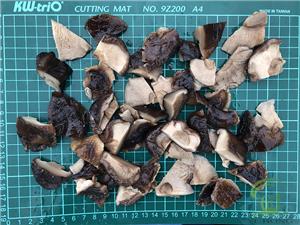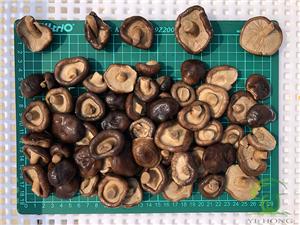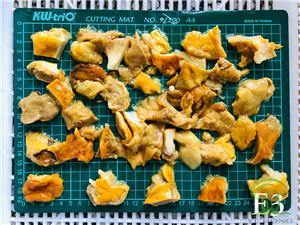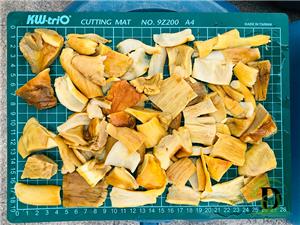
Production Technology Principle of Salted Boletus Stem
Salting is a traditional food preservation method that uses the osmotic pressure created by a high concentration of brine to inhibit microbial growth and enzyme activity, thereby extending the shelf life of food. For products like porcini mushroom stems, salting is not only a preservation method but also a key step in creating their specific flavor.
Raw material selection and pretreatment
The quality of salted boletus stem begins with the selection of raw materials. The first step in the production process is to strictly control the quality of raw materials.
Material Selection Standards
The basic requirements for fresh mushrooms in production are that they be free from pests and mechanical damage, and have smooth cut surfaces on the stems. This standard is mainly to ensure relatively uniform maturity of the raw materials, making it easier to control the process during slicing and salting.
Washing and Impurity Removal
After harvesting, fresh mushrooms have mud and impurities attached to their surface, which need to be removed by rinsing. Generally, they are washed repeatedly with clean water 3-4 times to thoroughly remove impurities. This seemingly simple process is actually the first step in preventing microbial contamination and is the foundation for ensuring the hygienic quality of the final product.
Slicing and Color Protection
After washing, the porcini stems need to be sliced into uniformly thin slices using a specialized directional slicer. Slice thickness is a key parameter: too thick, and salt penetration will be uneven; too thin, and they will easily break and have a poor texture. After slicing, they need to be immediately immersed in dilute brine. The core purpose of this step is to prevent browning. Porcini mushrooms contain polyphenol oxidase; when the tissue is damaged and exposed to air, it will catalyze the oxidation of phenolic substances to produce brown polymers. Soaking in dilute brine can both isolate the mushrooms from air and initially establish a permeable environment, preparing them for subsequent processes.
Pickling Process Principle
Pickling is the core of the salting process. Its principle is to utilize the high osmotic pressure environment created by a high-concentration brine solution, causing water to seep outwards from the mushroom cells and salt to seep inwards, ultimately inhibiting microbial growth and extending shelf life.
In production, a two-stage pickling process is typically used. In the first stage, the treated mushroom slices are placed in a 10% to 15% brine solution for 1 to 2 days. This concentration begins to create osmotic pressure, causing initial dehydration of the mushrooms. In the second stage, they are transferred to a 23% to 25% saturated brine solution and pickled for another 3 to 4 days. During this stage, the brine concentration must be maintained above 20%, and salt should be added promptly if the concentration is insufficient.
The migration of water and salt during salting is bidirectional. While salt seeps in, some soluble components in the mushrooms are also lost along with the seeping water. This is an inherent characteristic of the salting process and explains why the nutritional content of salted products is slightly lower than that of fresh products. However, salting can extend the shelf life of the product to 12 to 18 months, making this processing method practically valuable for seasons and regions where fresh sales are not possible.
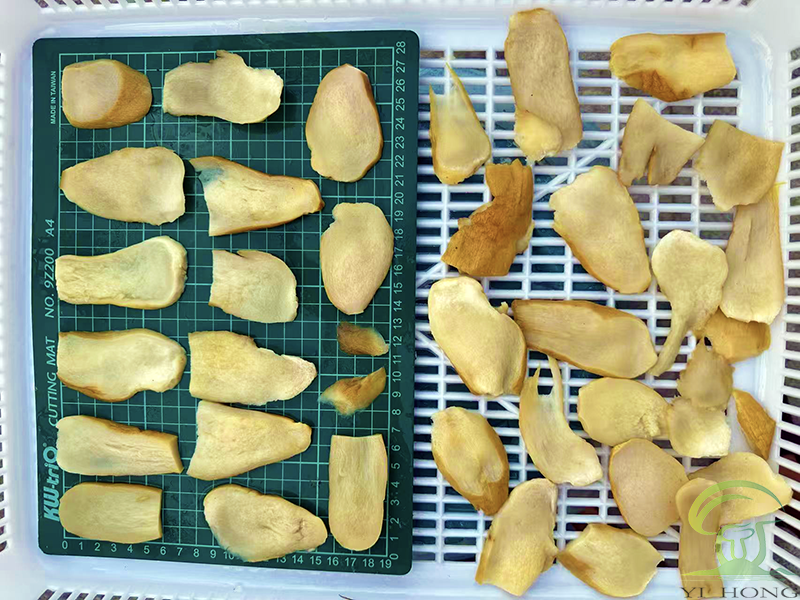
Key Points of Desalination Operation
Salted boletus stems require desalination before becoming a final product. For B2B customers, this process ensures the desalted product is closer to ready-to-use, reducing subsequent processing steps.
During the operation, the pickled mushroom slices are placed in a desalination tank and soaked in clean water, typically changing the water or soaking in running water 2-3 times. The goal is to reduce the salt content from over 20% to around 3%-1%, achieving a suitable salinity.
Desalination is not only about removing excess salt but also about restoring the texture. As salt is released, the mushroom tissue reabsorbs water and swells, gradually regaining its elasticity and creating the characteristic crisp texture of salted boletus stems. Simultaneously, desalination removes some soluble flavor components from the mushroom, but after blanching and pickling, the main structural proteins and polysaccharides of the mushroom have stabilized, preserving the core flavor framework.
Subsequent Processing: After desalination, the mushroom slices need to be rinsed with clean water and then centrifuged to reduce the moisture content to below 50%. This step facilitates subsequent packaging and reduces water activity, further enhancing the product's microbial stability. Finally, it is packaged after sterilization.
Packing and Storage
After pickling, the porcini mushroom stems need to be stored in containers to maintain quality stability. During the process, the mushrooms are placed in food-grade plastic containers, submerged in saturated brine, and then a layer of fine salt is sprinkled on the surface before sealing. This method ensures the mushrooms remain in a saturated brine environment, and the salt prevents the surface brine from being diluted, reducing the risk of microbial growth.
Storage Requirements: Salted porcini mushroom stems should be stored in a cool, well-ventilated, and dry place, avoiding direct sunlight. Store under suitable temperature conditions.
Relationship between Process Parameters and Quality
Examining the salting process from the perspective of production technology principles reveals multiple balances at play:
Salting involves the extraction of some nutrients in exchange for extending the product's shelf life. Fresh mushrooms cannot be stored for long periods, making salting a viable processing solution for out-of-season supply or long-distance transportation.
Adjustments to parameters such as slice thickness, brine concentration, and pickling time directly affect the final taste. Slices that are too thin are prone to breakage, while slices that are too thick fail to penetrate the salt completely. A brine concentration that is too low can lead to spoilage, while a concentration that is too high results in an overly salty product. The goal of process control is to find a relatively suitable combination of parameters among these variables.
As a natural product, porcini mushrooms exhibit inherent differences between batches, origins, and harvest times. Mature production processes adjust process parameters appropriately based on the condition of the raw materials to maintain consistent product quality across different batches.
These technical controls serve as the basis for quality management for producers and can also be used by purchasers as a reference for assessing the professionalism of suppliers. For B2B buyers who require a stable supply, the supplier's ability to control processes and their experience in dealing with raw material fluctuations are just as important as price factors.