How Are Brined Mushrooms Produced? Factory Process Explained for Global Buyers
When importers and food manufacturers ask how brined mushrooms are produced, they are usually not looking for a cooking explanation. They want to understand whether the product can be trusted as a stable industrial ingredient. Production process matters because it affects texture, color, salt balance, shelf life, drained yield, foreign matter control, documentation, and repeat quality. For a buyer who purchases containers of preserved mushrooms, the process behind the product is directly connected to commercial risk.
Brined mushroom production starts with agricultural raw material, but it ends as a B2B supply-chain product. This difference is important. Fresh mushrooms are short-life products influenced by harvest timing and local distribution. Brined mushrooms are preserved for longer-distance trade and further processing. The factory's job is to turn variable raw mushrooms into a controlled ingredient that can be transported, stored, inspected, repacked, seasoned, or used in food manufacturing.
Step 1: Raw Material Selection
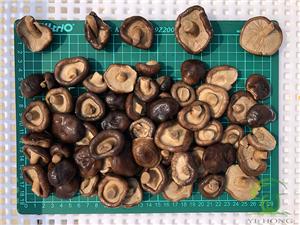
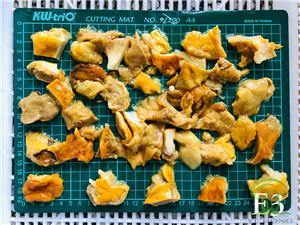
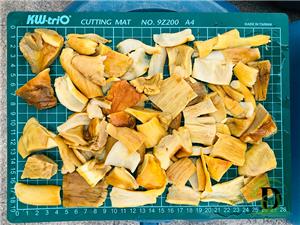
The first step is choosing suitable mushrooms. For brined mushroom production, the supplier must consider species, maturity, size, physical condition, harvest area, and intended application. Porcini mushrooms, nameko mushrooms, shiitake mushrooms, chanterelles, stropharia mushrooms, and hazel mushrooms do not behave identically during processing. Some are valued for aroma, some for texture, some for appearance, and some for cost-effective bulk use. A factory must understand these differences before preservation begins.
Raw material selection is not only a visual task. Mushrooms may contain soil, leaves, damaged pieces, broken stems, or uneven maturity. If these problems are not controlled early, later processing cannot fully repair them. A good factory therefore sorts raw mushrooms before deeper processing. Depending on the product, workers may remove damaged areas, separate sizes, discard unsuitable pieces, or classify mushrooms by grade. This is one of the reasons two suppliers can quote different prices for the same product name. They may not be using the same raw material standard.
For buyers, the key is to ask how the supplier defines grade. Terms such as Grade A, premium, selected, or standard are not meaningful unless connected to visible criteria. A buyer should ask for photos, sample descriptions, size range, acceptable defect level, and intended use. A sauce factory may accept pieces that a retail jar buyer would reject. A food-service buyer may need a practical balance between appearance and cost. The correct raw material standard depends on the buyer's channel.
Step 2: Cleaning and Trimming
After selection, mushrooms are cleaned to remove soil, forest particles, damaged tissue, and other unwanted material. Cleaning is especially important for wild mushrooms because they may come from natural collection areas. The process must be careful enough to reduce impurities but not so aggressive that it damages the mushroom structure. Excessive handling can break caps, weaken texture, or reduce the product's visual value.
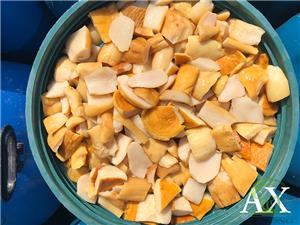
Trimming may include removing tough stems, cutting oversized pieces, separating broken parts, or preparing the mushroom into a required form. Some buyers need whole mushrooms, while others require sliced, diced, or irregular pieces for further processing. The cutting style affects drained yield, texture, and final use. For example, a sauce manufacturer may prefer smaller pieces that integrate easily into a product, while a gourmet ingredient buyer may prefer larger recognizable pieces.
A professional supplier should be able to explain what trimming standard is used and how it affects the quotation. If a buyer only asks for the lowest price, the supplier may offer a grade with more broken pieces or less strict trimming. If the buyer needs strong visual quality, the factory must spend more labor on sorting and trimming. This cost difference is normal and should be discussed openly.
Step 3: Processing Before Brining
Depending on mushroom type and factory method, mushrooms may undergo heat treatment or other preparation before final brining. The goal is to stabilize the raw material, manage texture, reduce unwanted biological activity, and prepare the mushrooms for preservation. Buyers should not assume that every product follows exactly the same method. Species, size, destination requirement, and customer specification can influence processing details.
From a buyer's perspective, the most important question is not the exact factory secret but the control system. Are processing times monitored? Are batches separated? Is water quality controlled? Are workers trained to prevent cross-contamination? Is there a batch record? Are samples retained? These practical controls matter more than a marketing statement that the product is high quality.
Food manufacturers should also evaluate how the process affects performance in their own production. A mushroom used in a sauce may need to hold texture after additional heating. A mushroom used in a cold mixed product may need clean appearance and stable flavor. A repacker may care about piece integrity after transportation and handling. The same preserved mushroom can perform differently in different applications, so buyers should test samples under real production conditions.
| Production Stage | Factory Purpose | Buyer Concern |
|---|---|---|
| Raw material selection | Choose suitable species, grade, and maturity | Appearance, aroma, texture, seasonal availability |
| Cleaning and trimming | Remove impurities and prepare shape | Foreign matter, broken pieces, labor quality |
| Pre-brining processing | Stabilize product before preservation | Texture, batch control, processing consistency |
| Brine preparation | Create preservation environment | Salt level, liquid clarity, flavor impact |
| Packing and storage | Protect product during trade and storage | Leakage, labeling, drum strength, traceability |
| Inspection | Confirm shipment quality | Sample match, documents, pre-shipment confidence |
Step 4: Brine Preparation and Preservation
Brine is central to the preserved mushroom category. It is not simply water with salt added randomly. Industrial brine must be prepared according to the required product condition and preservation strategy. The salt concentration, liquid ratio, mushroom condition, container type, and storage environment all influence the final product. Buyers should discuss brine expectations clearly because salt level can affect both shelf life and downstream processing.
Some buyers want a product that can be rinsed and used in further processing. Others need mushrooms that will be repacked into a consumer product with additional seasoning. Sauce manufacturers may adjust their own formula based on the salt already present in the mushroom ingredient. If the salt level is not considered in advance, the final product may become too salty or require extra processing steps. This is why technical communication is important before mass orders.
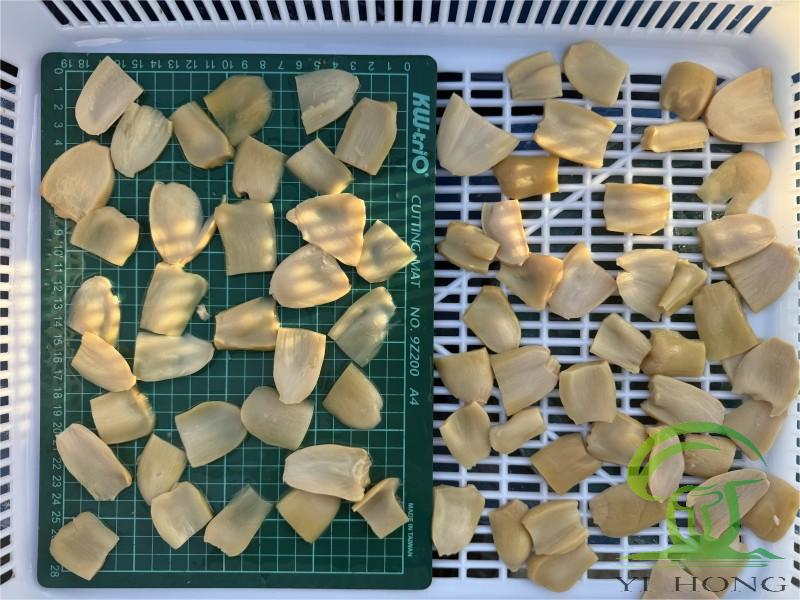
Brine clarity can also be a quality signal, although natural mushroom products may release color or particles depending on species and processing. Buyers should compare samples and ask the supplier what is normal for each product. For example, nameko mushrooms have a characteristic texture that may affect liquid appearance differently from shiitake or porcini. A knowledgeable supplier can explain these differences instead of treating every mushroom as the same item.
Step 5: Packing for Industrial Trade
Packing connects factory production with international trade. Brined mushrooms may be packed in drums, tins, jars, pails, or other formats depending on buyer requirements. For bulk B2B trade, drums are common because they support efficient container loading and industrial use. However, drum packing must still be managed carefully. The drum material, inner liner, seal, net weight, label, and palletizing method all affect shipment safety and warehouse handling.
Buyers should remember that packing is part of the product specification. If a buyer plans to repack locally, the opening condition, liquid ratio, piece integrity, and label traceability all matter. If the buyer sells to food factories, the factories may require batch codes and clear product identification. If the buyer supplies food-service channels, convenience and storage after opening may become more important. There is no single best packing format; there is only the best packing format for a specific business model.
Container loading should also be discussed. A supplier may provide estimated loading quantity, pallet information, and packing list details. Importers should check whether the packing format is compatible with their warehouse and local distribution. A small difference in drum size or pallet method can affect unloading, storage, and local transport cost.
Step 6: Inspection and Batch Traceability
Inspection is where production becomes evidence. A buyer should not rely only on written promises. Pre-shipment photos, sample comparison, packing records, batch numbers, and document checks can reduce uncertainty. For high-value or first-time orders, third-party inspection may be useful. For repeat orders, a stable supplier should still keep internal records and retained samples.
Traceability is especially important for food ingredients. If a problem occurs, the buyer and supplier need to identify which batch, shipment, packing date, or raw material group is involved. Good traceability does not mean problems never happen. It means the supplier can respond professionally when questions arise. This is a major difference between short-term traders and serious food ingredient manufacturers.
Importers should ask suppliers how batches are separated, how documents are prepared, and whether retained samples are stored. These questions are not aggressive; they are normal B2B due diligence. Reliable suppliers usually welcome detailed questions because clear specifications protect both sides.
How Production Knowledge Helps Buyers Choose Suppliers
Understanding the production process helps buyers ask better questions. Instead of asking only for price, a buyer can ask what grade is being quoted, how the mushrooms are sorted, what packing is used, whether samples match shipment quality, how brine concentration is controlled, and what documentation can be provided. These questions reveal whether a supplier is experienced in international B2B trade or only repeating product names.
The best supplier for one buyer may not be the best supplier for another. A premium retail brand may need strict appearance and packaging. A sauce factory may need stable bulk supply and cost control. A distributor may need broad product range and flexible shipment planning. Production knowledge allows each buyer to choose according to business reality rather than generic ranking claims.
For companies sourcing from China, production transparency is an advantage. When a supplier can explain the process clearly, provide samples, discuss specifications, and support documentation, the buyer gains confidence before placing a larger order. In preserved mushroom trade, trust is built through technical clarity and repeated performance.
YIHONG and Brined Mushroom Production
YIHONG Brined Fungi focuses on preserved mushroom products for B2B buyers, including brined porcini mushrooms, brined nameko mushrooms, brined shiitake mushrooms, brined chanterelles, brined stropharia mushrooms, hazel mushrooms in brine, and selected frozen mushroom products. Buyers evaluating YIHONG should discuss product specification, packing format, sample approval, and destination requirements according to their own market.
For food manufacturers and importers, the practical value of working with a supplier such as YIHONG is not only access to mushroom products, but also the ability to communicate around industrial needs: grade, brine condition, packing, export documents, and repeat supply. As with any international purchase, buyers should verify samples and documents before placing large orders.