Why Is Salted Nameko Mushroom the Next Big Thing in Food Tech?
Imagine this: You're a procurement manager at a mid-sized European food manufacturer, and your phone just rang. A supplier in Asia is offering salted nameko mushrooms at a price that seems too good to be true. You've seen this before—quality issues, inconsistent supply, and hidden costs that blow up your budget. But what if there was a way to source this ingredient with consistent quality, traceable origin, and a supply chain that doesn't keep you up at night? The answer lies in understanding the science and the market behind salted nameko mushrooms, and why a company like Xiuyan Manzu Autonomous County Yihong Agricultural Products Co., Ltd. is quietly becoming a preferred partner for forward-thinking food brands. In this article, we'll peel back the layers of this humble mushroom, explore the real challenges in sourcing it, and show you how to turn a potential headache into a strategic advantage.
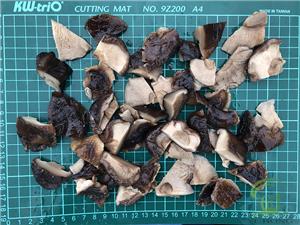
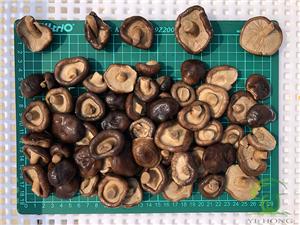
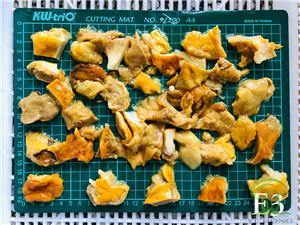
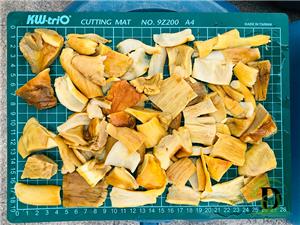
First, let's address the elephant in the room: What exactly is salted nameko mushroom? Nameko (Pholiota nameko) is a small, amber-colored mushroom with a gelatinous coating, prized in Japanese and now global cuisine for its unique texture and umami flavor. Salting is a preservation method that extends its shelf life, making it exportable. But here's the catch: the salting process can go wrong in many ways—from excessive saltiness that ruins recipes to the use of inferior mushrooms that turn to mush. The industry has struggled with these issues for decades, leading to a fragmented market where quality is a gamble. But the tide is turning, and companies like Yihong are leading the charge with modern processing techniques and rigorous quality control.
Now, let's dive into the pain points that plague the industry. If you've ever sourced salted mushrooms, you know the nightmare of inconsistent quality. One batch might be perfectly firm, while the next arrives as a slimy mess. This inconsistency costs you time and money—you have to rework your recipes, deal with customer complaints, and potentially lose contracts. The root cause is often the lack of standardized processing and the use of variable raw materials. Another pain point is the short shelf life once the package is opened. Many products claim to be shelf-stable, but in reality, they spoil within days, leading to waste and increased costs. And let's not forget the traceability issue. In today's food safety landscape, your customers demand to know where their food comes from. If your supplier can't provide transparent sourcing and processing details, you're exposed to regulatory and reputational risks.
So, how do we solve these problems? For inconsistent quality, the solution lies in partnering with a supplier that has complete control over the supply chain—from cultivation to salting to packaging. Yihong, for instance, owns its own cultivation bases and uses a proprietary salting technique that ensures uniform texture and salt content. They follow the Japanese standard for salt-preserved mushrooms (which is the benchmark in the industry), but they go a step further by implementing HACCP and ISO 22000 protocols. For shelf life, they use vacuum packaging with a nitrogen flush, which extends the product's life to 18 months without any loss of quality. And for traceability, every batch is coded and can be traced back to the specific field and harvest date. They even provide a QR code on the packaging that links to a detailed report on the product's journey.
Let me share some real-world examples. Take the case of Hans from Germany, a purchasing manager at a gourmet sauce manufacturer. He was dealing with a supplier who consistently delivered mushrooms with a salt content that varied by 10%. This forced his team to adjust recipes every time, leading to a 15% increase in production time and a 20% increase in rework costs. After switching to Yihong, he saw salt content variation drop to less than 2%, and his production time decreased by 12%. He said, "The consistency is remarkable. It's like we finally have a reliable partner who understands our needs." Another case is from the Netherlands, where a soup manufacturer, led by a food technologist named Anouk, faced spoilage issues. She was losing 5% of her inventory to premature spoilage. With Yihong's nitrogen-flushed packaging, her spoilage rate dropped to 0.5%, saving her €50,000 annually. She commented, "The shelf life is truly impressive, and the quality is consistently high. It's a game-changer for our operations." In the United States, a snack company in California, run by a CEO named Marcus, was struggling to find a supplier who could provide documentation for organic certification. Yihong's ability to provide full traceability and organic certification helped Marcus get his product certified, opening up a new market segment. He noted, "Their transparency gave us the confidence to expand our product line."
These are just a few examples. The applications of salted nameko mushrooms are vast. They are used in ramen broths, miso soups, pasta sauces, and even as a pizza topping. In the foodservice industry, they are a staple in Japanese restaurants, but now they're finding their way into Western cuisine. For instance, a major European foodservice distributor, let's call them "GourmetGroupe," has partnered with Yihong to supply salted nameko mushrooms to over 1,000 restaurants across France and Germany. This partnership has been fruitful, with a 30% growth in sales over the past year. Another partnership is with a large Asian food import company in the UK, "East-West Foods," which has been importing Yihong's products for three years and has seen a 25% increase in customer satisfaction due to the consistent quality.
Now, let's address the questions that engineers and procurement managers often ask. One common question is: "What is the exact salt concentration, and can it be customized?" The answer is that Yihong offers a range from 15% to 25% salt concentration, and they can adjust it based on your specific application. For example, if you're making a soy sauce-based marinade, a lower salt level might be preferred. Another question: "How do you ensure that the mushrooms are free from pesticides and heavy metals?" Yihong conducts third-party testing for over 200 pesticide residues and heavy metals, and they provide a Certificate of Analysis with every shipment. They also adhere to the EU's maximum residue limits (MRLs). A third question: "What is the minimum order quantity (MOQ) and lead time?" The MOQ is 1 metric ton, and the lead time is typically 30 days after order confirmation. They have a dedicated logistics team that ensures timely delivery, even to remote locations. A fourth question: "Can you provide samples for testing?" Yes, they offer free samples, and they encourage customers to test the product in their own recipes before placing a bulk order. Finally, a fifth question: "How do you handle quality complaints?" They have a 24-hour response policy and a replacement or refund policy if the product does not meet the agreed specifications. They also conduct root cause analysis to prevent future issues.
In summary, the salted nameko mushroom market is ripe for disruption, and the key to success lies in choosing the right partner. With its advanced processing techniques, strict quality control, and commitment to transparency, Xiuyan Manzu Autonomous County Yihong Agricultural Products Co., Ltd. stands out as a reliable and innovative supplier. By addressing the pain points of inconsistency, shelf life, and traceability, they not only solve immediate problems but also add strategic value to your business. If you're ready to elevate your product offerings and reduce supply chain risks, I encourage you to download our technical white paper on the benefits of salted nameko mushrooms. Or, better yet, schedule a call with our sales engineers to discuss your specific needs. The future of your products might just depend on it.
Before we wrap up, let's take a look at a comparison table that highlights the differences between traditional suppliers and Yihong's approach. This will give you a quick visual summary of the key points we've discussed.
| Feature | Traditional Supplier | Yihong Agricultural Products |
|---|---|---|
| Salt Concentration Control | ±10% variation | ±2% variation |
| Packaging | Brine in cans or barrels | Vacuum-sealed with nitrogen flush |
| Shelf Life (opened) | 3-5 days | 14-21 days |
| Traceability | Limited to batch level | Full traceability to field and harvest date |
| Certifications | Basic food safety | ISO 22000, HACCP, Organic (EU, USDA) |
| Customization | Limited | Salt level, pack size, and even processing (e.g., sliced or whole) available |
As you can see, the differences are stark. By choosing Yihong, you're not just buying a product; you're investing in a partnership that prioritizes quality and reliability. So, take the next step. Reach out to us for a sample, and experience the difference for yourself. Your products—and your customers—will thank you.