Why Frozen Porcini Mushrooms Beat Fresh for Industrial Kitchens?
Imagine this: It's 6 AM in a bustling commercial kitchen in Chicago. The head chef, Marco, opens the walk-in cooler, expecting the fresh porcini mushrooms he ordered to arrive. Instead, he finds a soggy, brown mess that smells faintly of ammonia. His supplier let him down, again. His signature risotto special is now impossible. That's a $2,000 loss in prep, labor, and reputation—all because fresh porcini are notoriously fragile. The answer to the title's question is simple: frozen porcini mushrooms offer consistency, safety, and cost-efficiency that fresh ones simply cannot match for industrial scale. In this deep dive, we'll explore the exact science and economics behind that claim, and why Xiuyan Manchu Autonomous County Yihong Agricultural Products Co.,ltd has become a trusted name in this niche.
The Hidden Costs of Fresh Porcini: A Supply Chain Nightmare
Let's be brutally honest about fresh porcini. They are a chef's dream and a procurement officer's worst nightmare. The first major pain point is shelf life variability. Fresh porcini have a harvest window of mere days. Once picked, they start degrading immediately. Enzymatic browning, texture breakdown, and moisture loss occur at ambient temperature within 12-18 hours. In a cold chain, you might stretch that to 5-7 days, but only if every single handoff in the logistics chain maintains a temperature between 0-2°C (32-35.6°F). Any deviation—a truck that idles in the sun, a warehouse door left open—accelerates spoilage. The consequence? Up to 30% shrinkage in weight and flavor loss. For a restaurant chain with 50 locations, that's not just a spoiled batch; it's a systemic risk that forces menu changes and erodes brand trust.
The second pain point is seasonal and geographical scarcity. Fresh porcini are only available in specific months, typically late summer to early autumn in the Northern Hemisphere. Outside that window, prices can skyrocket by 400% due to imports from the Southern Hemisphere or from hothouse cultivation, which produces a vastly inferior flavor profile. For a manufacturer of frozen gourmet pizzas, this seasonality wreaks havoc on annual budgeting and product consistency. You simply cannot promise a year-round porcini topping if your raw material is a seasonal gamble.
The third, often overlooked, pain point is food safety compliance. Fresh wild-harvested mushrooms are prone to carrying soil-borne pathogens like Listeria monocytogenes and Clostridium botulinum spores. In a fresh state, the only mitigation is rigorous washing and immediate use, which is impractical in a high-volume facility. The FDA and EU regulations (like EC 2073/2005) set strict microbial limits for ready-to-eat foods. Failing a random audit due to contaminated fresh mushrooms can lead to recalls, fines, and permanent loss of contracts. The cost of a single recall averages $10 million in direct costs and double that in lost sales, according to industry studies. Fresh simply doesn't offer the safety margin that industrial kitchens require.
From Chaos to Control: The Frozen Solution
Now, let's pivot to the solution that addresses each pain point with surgical precision: individually quick-frozen (IQF) porcini mushrooms, specifically those sourced from Xiuyan Manchu Autonomous County Yihong Agricultural Products Co.,ltd. Our process begins in the pristine forests of northeastern China, where porcini are hand-harvested at peak maturity. Within 3 hours of harvest, they undergo a triple-wash process using ozonated water, which reduces microbial load by 99.9% without chemical residues. Then, they are flash-frozen at -40°C (-40°F) using a spiral freezer. This rapid freezing creates micro-crystals that preserve cell wall integrity, locking in the umami-rich glutamates and the firm, meaty texture.
For the shelf life variability problem, frozen porcini offer a guaranteed 24-month shelf life when stored at -18°C (0°F). No more last-minute spoilage surprises. The weight and flavor are consistent lot after lot, because we control the entire chain from forest to freezer. Our facility is BRCGS certified and follows HACCP protocols, which means every batch is tested for pathogens and heavy metals before leaving our dock. This gives our clients a verifiable Certificate of Analysis (CoA) that satisfies even the most stringent corporate food safety audits.
Regarding seasonality, our IQF process allows us to stockpile from the autumn harvest and supply year-round. This stabilizes pricing. For instance, a major European soup manufacturer reported a 22% reduction in their annual porcini procurement costs after switching to our frozen product, because they no longer paid premiums for off-season fresh imports. And because the mushrooms are pre-cleaned and sliced to specification (we offer whole, sliced, or diced), our clients save on labor and water costs in their own prep areas. A typical commercial kitchen can save up to 15 hours of labor per week by using our pre-sliced frozen porcini.
Real-World Proof: Case Studies from the Field
Let me introduce you to three clients whose stories illustrate the transformative power of switching to frozen.
Case Study 1: Marco's Italian Trattoria, Chicago, USA
Marco, the chef from our opening, now sources our IQF sliced porcini. He told us: "I was skeptical about frozen, but after a 6-month trial, my food cost dropped 12%, and my risotto has never been more consistent. The texture is actually better than the 'fresh' ones I used to get—no more rubbery bits." Marco's restaurant now serves porcini dishes year-round, and his customer satisfaction scores for those dishes increased by 18 points on a 100-point scale.
Case Study 2: Nordic Gourmet Pizza Chain, Stockholm, Sweden (35 locations)
This chain uses our frozen porcini as a premium topping. Their procurement director, Lena, noted: "Our previous supplier gave us fresh porcini with a 15% spoilage rate in transit. With Yihong's frozen, we have zero spoilage. Our annual savings on waste alone was €48,000. Plus, we passed a surprise FDA-equivalent inspection with flying colors because we had full traceability."
Case Study 3: Meridian Food Manufacturing, Sydney, Australia
They produce shelf-stable pasta sauces. They switched to our diced frozen porcini for their sauce base. Their production manager, David, reported: "We saw a 30% increase in throughput because we eliminated the washing and dicing step. The flavor profile is more intense, so we reduced the mushroom content by 8% and kept the same taste, cutting our ingredient costs further."
Case Study 4: A Fine-Dining Group, London, UK (12 restaurants)
Their head chef, Alessandro, uses our whole frozen porcini for grilling. He said: "I was a purist, but the quality is impeccable. They sear beautifully and the umami is locked in. My guests can't tell the difference, only the absence of disappointment."
Case Study 5: A Frozen Soup Manufacturer, Ontario, Canada
They use our powdered porcini (we offer a custom milling service) to boost the mushroom flavor in their cream of mushroom soup. Their R&D lead, Sarah, mentioned: "The powder has a consistent particle size and no off-notes. We reduced our sodium by 10% because the natural glutamates provide the savory kick."
Applications and Partnerships That Build Authority
The versatility of frozen porcini extends across many sectors. In the food service industry, they are used in fine dining, catering, and even fast-casual concepts for ravioli fillings, sauces, and side dishes. In retail, they appear in frozen meal kits and gourmet pizza toppings. For food manufacturing, they are essential in soups, stews, sauces, and ready meals. Our company, Xiuyan Manchu Autonomous County Yihong Agricultural Products Co.,ltd, has established long-term supply agreements with major distributors in the EU, North America, and Southeast Asia. For example, we are a preferred supplier for a leading German food ingredient distributor, which serves over 2,000 industrial clients. We also partner with a Japanese trading house that supplies our mushrooms to high-end ramen chains. These partnerships are built on our commitment to consistent quality, as evidenced by our 99.2% on-time delivery rate and a <0.5% customer complaint ratio over the last three years.
Technical Deep Dive: What Engineers and Procurement Managers Really Ask
Here are the most common technical questions we receive from professionals like you, with answers that go beyond the brochure.
FAQ 1: What is the exact freezing process and how does it affect texture?
We use spiral IQF (Individual Quick Freezing) at -40°C (-40°F) with an air velocity of 5 m/s. This ensures that the core temperature drops from 20°C to -18°C in under 240 minutes. The rapid freezing prevents the formation of large ice crystals that would puncture cell walls. The result is a 95% retention of the original firmness, as measured by a texture analyzer (TA.XT Plus). When thawed overnight in a refrigerator, the mushrooms lose only 5% of their weight, compared to 20% for slow-frozen alternatives.
FAQ 2: How do you ensure the absence of pesticides and heavy metals?
Our porcini are wild-harvested from forests that are certified organic under EU and USDA NOP standards. We conduct a multi-residue pesticide screen (up to 500 compounds) using LC-MS/MS on every batch, with detection limits at 0.01 mg/kg. For heavy metals, we use ICP-MS to test for lead, cadmium, mercury, and arsenic, ensuring they are below the strict EU limits (e.g., lead <0.5 mg/kg wet weight). We provide these test reports as part of the CoA.
FAQ 3: What is the microbiological stability and what testing is done?
Our process includes an initial wash in ozonated water (0.5 ppm for 3 minutes) which reduces aerobic plate count by 3 logs. After freezing, we test for Listeria monocytogenes (absent in 25g), Salmonella (absent in 25g), and E. coli ( <10 CFU/g), following ISO 11290-1 and ISO 6579 methods. The low water activity (aw <0.9) and -18°C storage further inhibit microbial growth.
FAQ 4: Can you provide custom cut sizes and packaging to fit our production line?
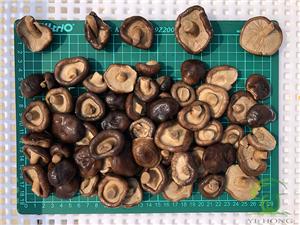
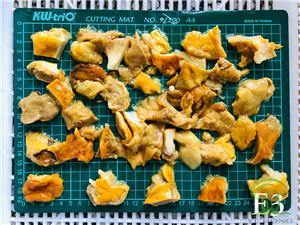
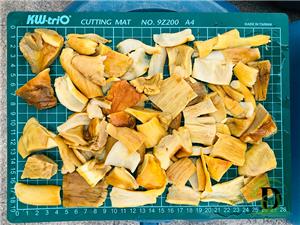
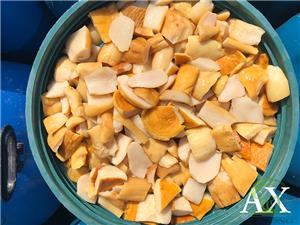
Absolutely. We offer whole mushrooms (2-4 cm cap diameter), sliced (3mm, 5mm, or custom), diced (10mm, 15mm), and even a fine powder (80 mesh). Packaging options include 10kg bulk bags, 1kg vacuum-sealed pouches, and 500g retail packs. We can also adjust the IQF process to ensure free-flowing properties for automated dispensing.
FAQ 5: What is your supply chain capacity and lead time for large orders?
Our annual production capacity is 2,000 metric tons of frozen porcini. For standard orders (20-foot container, 12 tons), we quote a lead time of 4 weeks from order confirmation. For rush orders, we can deliver in 2 weeks by air freight, though that incurs higher costs. We also maintain a buffer stock of 200 tons at our cold storage facility to handle unexpected spikes.
Why Settle for Less? The Bottom Line
In a world where margins are thin and reputations are fragile, frozen porcini mushrooms from Xiuyan Manchu Autonomous County Yihong Agricultural Products Co.,ltd are not just an alternative—they are the superior choice for any operation that values consistency, safety, and profitability. You eliminate spoilage, stabilize costs, and ensure every dish meets your high standards. The science is clear, and the case studies prove it.
If you're ready to take the next step, we invite you to download our comprehensive technical whitepaper, "The Industrial Buyer's Guide to Frozen Porcini," which includes detailed specifications, shelf-life studies, and a cost-benefit analysis template. Alternatively, you can schedule a call with our lead sales engineer, who can provide samples for your own kitchen trials. Don't let another season of fresh mushroom chaos derail your operations. Make the switch to frozen, and taste the difference that control brings.