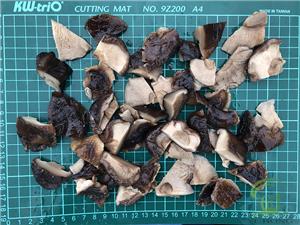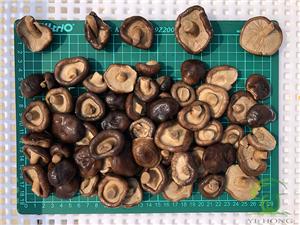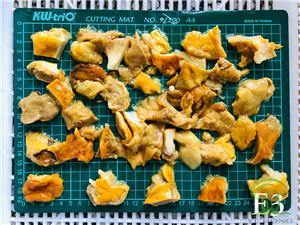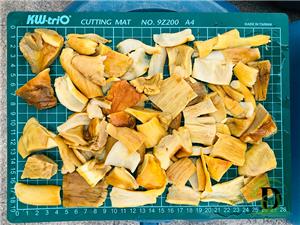
Why Do Food Processing Companies Choose Boletus Edulis in Brine as a Raw Ingredient?
In the food processing industry, boletus mushrooms have long been regarded as a mushroom ingredient with distinctive flavor and high application value. However, for food processing plants and reprocessing companies, fresh boletus mushrooms present clear limitations when used at scale, including strong seasonality, high loss rates, and significant differences between batches.
Against this background, boletus edulis in brine has gradually become an important supplementary option on the raw material side for food processing companies. It is not intended for direct consumption, but rather a pre-processed mushroom ingredient suitable for further processing, and is widely used within industrial food production systems.
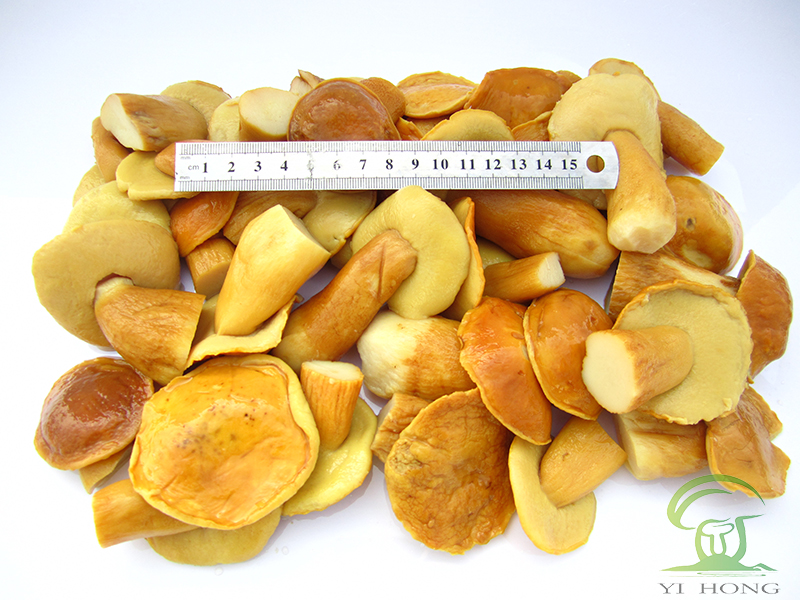
Why do food processing plants choose brine-preserved porcini mushrooms as an ingredient?
For food processors, food manufacturers, and ingredient processors, the core consideration in ingredient selection is never whether the ingredient is "high-end," but rather whether it is stable, controllable, and suitable for large-scale production.
1. Reducing Dependence on the Seasonality of Fresh Boletus Mushrooms:
Fresh boletus mushrooms are highly dependent on natural harvesting cycles. Their supply is concentrated within a limited period, prices fluctuate significantly, and quality can vary widely between different origins and batches. This makes them less suitable for food processing companies that require year-round, continuous production.
Through initial cleaning, sorting, and brine immersion, boletus edulis in brine significantly extends storage life without changing the mushroom’s basic structure.
This allows food processors to:
Use boletus mushrooms across different seasons.
Plan production more consistently and reliably.
Reduce the risk of production stoppages caused by raw material shortages.
2. More suitable for standardization and large-scale processing:
In industrialized food production, consistency of raw materials is often more important than "freshness."
Brined porcini mushrooms are typically graded and processed according to specifications, making them easier to control in downstream processing:
More uniform slice and chunk sizes.
Maintain structural stability during heating, re-cooking, or re-seasoning.
Easier to replicate the texture and appearance of the finished product.
This is particularly crucial for categories such as ready-to-eat meals, frozen foods, and prepared food kits.
3. Lowering Overall Costs and Raw Material Losses:
While the unit price of brine-preserved porcini mushrooms may not be significantly lower than fresh ones, they offer greater advantages to food processing companies in terms of overall costs:
Lower storage and transportation losses.
Reduced raw material pre-processing steps.
Reduced risk of rework or spoilage due to quality fluctuations.
For processing companies seeking long-term stable supply, this "predictable cost" is often more important than the price of a single purchase.
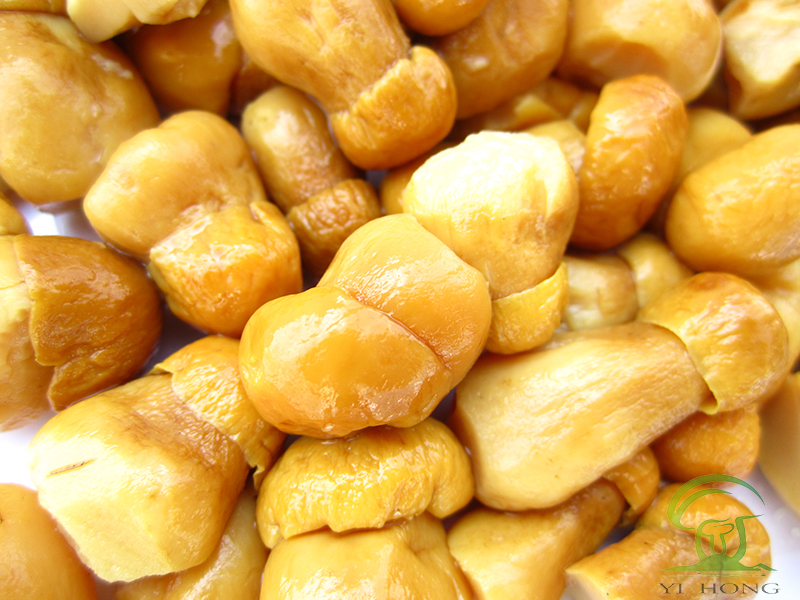
Typical Processing Applications of Boletus Edulis In Brine:
It is important to note that Boletus Edulis In Brine is supplied as a raw ingredient and is not suitable for direct consumption. It must undergo further processing before being used in finished food products.
Within food processing systems, common applications of Boletus Edulis In Brine include:
Ready meals and heat-and-serve products.
Frozen foods and quick-frozen prepared dishes.
Italian- or Western-style sauces and soup bases.
Compound seasonings and flavor bases.
Plant-based or vegetarian food products.
Thanks to its stable flavor profile, Boletus Edulis In Brine retains the characteristic aroma of boletus mushrooms after re-cooking, sautéing, or seasoning.
Long-Term Value of Boletus Edulis In Brine from a Raw Material Perspective:
As the food industry moves toward standardization and large-scale production, the demand for controllable raw materials continues to grow. The value of Boletus Edulis In Brine does not lie in direct consumer use, but in the stable role it plays within the supply chain.
For food processing companies, this ingredient can:
Support long-term, consistent product lines.
Reduce dependence on natural harvesting conditions.
Improve overall production efficiency and consistency.
This is why an increasing number of food processors are incorporating Boletus Edulis In Brine into their mushroom raw material systems.
- Industry News
- Product News
- Company News
- Video