Stropharia Rugosoannulata In Brine: Product Selection and Food Processing Applications
Food manufacturers and mushroom importers often need more than the most familiar mushroom varieties. Depending on the recipe and target market, they may also source specialty mushrooms for soups, sauces, prepared meals, mixed mushroom products, and foodservice applications.
Stropharia Rugosoannulata In Brine is one product that commercial buyers can evaluate when looking to expand their preserved mushroom ingredient range. Also known as wine cap mushroom, Stropharia rugosoannulata has a different appearance and structure from common shiitake or porcini products.
For B2B buyers, selecting this product involves several practical questions. Which format is appropriate? Should the buyer choose whole mushrooms, stems, or cut pieces? What product characteristics should be checked during sample testing? How should the cost be compared with other preserved mushroom ingredients?
This guide focuses on those questions and explains how to evaluate brined Stropharia according to real food production and purchasing requirements.
What Is Stropharia Rugosoannulata In Brine?
Stropharia rugosoannulata is commonly known as wine cap mushroom. In commercial food supply, the mushroom can be processed and supplied in brine for buyers who need a preserved ingredient rather than a fresh product.
Brined wine cap mushrooms may be considered by food ingredient importers, mushroom distributors, food processing factories, restaurant suppliers, and manufacturers producing savory foods.
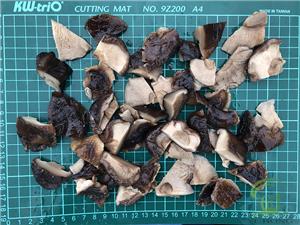
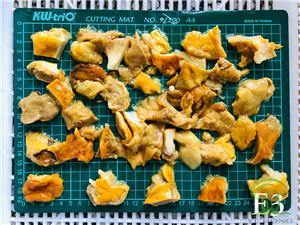
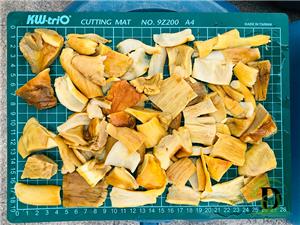
The product should be evaluated according to its specific form and intended application. A whole mushroom, a stem product, and a cut mushroom product may have different preparation requirements and different uses in the final food.
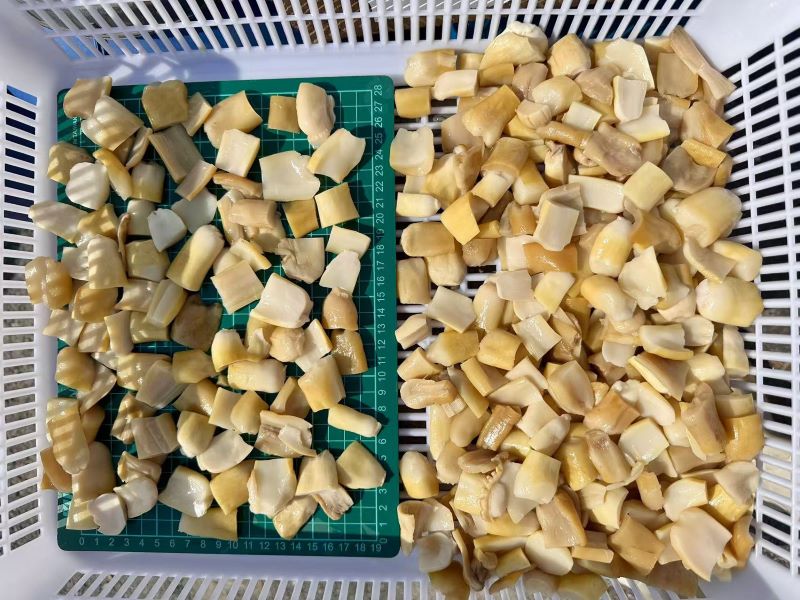
YIHONG's current product range includes brined wine cap mushrooms, brined Stropharia stems, and a listed 2 × 3 cm Stropharia Rugosoannulata In Brine product. These product options provide starting points for buyers, but the exact specification, availability, and packaging should be confirmed for the item being quoted.
Why Consider Brined Wine Cap Mushrooms?
For commercial kitchens and food manufacturers, a preserved mushroom ingredient can be useful when the production schedule requires a product that has already undergone preservation and packaging.
Brined wine cap mushrooms can be evaluated for recipes where the mushroom's texture and appearance suit the final product. Potential applications include soups, mushroom sauces, pizza toppings, prepared foods, and mixed mushroom products.
Whether the product is suitable depends on the recipe and the specific specification. Buyers should test the mushroom rather than assume that every grade or cut will perform identically.
Whole Mushrooms, Stems, and Cut Pieces
The product format is an important part of the purchasing decision.
Whole or Larger Pieces
Larger pieces may be useful when the mushroom remains visible in the final dish. They may also give the buyer more flexibility if the factory performs its own cutting and preparation.
However, additional processing can increase labor and equipment requirements. A buyer should compare the cost of the whole product with the cost of any preparation needed before production.
Stropharia Stems
Stem products may be appropriate for specific food applications where the stem portion meets the recipe's requirements. The buyer should confirm the product's exact composition and physical characteristics with the supplier.
Do not assume that a stem product and a whole mushroom product have the same texture, preparation requirements, or final yield.
Cut Pieces
Standardized cut pieces may be useful when the mushroom needs to be distributed through a sauce, filling, or prepared food. A defined size can make portioning and production planning easier.
For cut products, ask the supplier to confirm the dimensions, acceptable variation, and the expected proportion of pieces outside the agreed range.
How to Choose a Suitable Product for Each Application
Start with the final food and work backward to the ingredient specification.
| Application | Key Evaluation Points |
| Soup | Texture after cooking, piece size, and salt contribution |
| Mushroom sauce | Distribution, consistency, and preparation requirements |
| Pizza | Piece size, portioning, and appearance after heating |
| Prepared meals | Compatibility with other ingredients and cooking conditions |
| Foodservice | Packaging, handling, and the needs of commercial kitchens |
| Ingredient distribution | Specification clarity and suitability for different customers |
This approach prevents a common purchasing problem: choosing a product based on its name before confirming whether it suits the intended recipe.
What Does a 2 × 3 cm Specification Mean?
A size specification such as 2 × 3 cm can help buyers identify a product format, but the measurement method should be confirmed.
For example, the buyer should ask whether the dimensions describe the typical piece size, the cutting target, or a permitted range. It is also useful to ask how the supplier handles pieces that fall outside the agreed dimensions.
This matters because size variation can affect portioning and the final appearance of a commercial food product.
Before ordering, request the actual product specification and evaluate a sample against the needs of the production line.
Evaluating Texture and Appearance
For preserved mushrooms, texture should be assessed both before and after preparation.
A product may look suitable when first opened, but the buyer also needs to understand how it performs during cooking or mixing.
Sample evaluation should consider:
Appearance before preparation.
Size consistency.
Visible defects or damaged pieces.
Texture after cooking.
Behavior during mixing.
Suitability for the intended recipe.
Drained weight and usable quantity.
Where possible, test the product using the factory's actual recipe and equipment. A simple kitchen test may provide an initial indication, but a production trial is more representative of commercial use.
Understanding Brine in the Final Recipe
Brined mushrooms are supplied with a preservation liquid, so the buyer should consider how the product will be prepared before use.
Depending on the formulation and product specification, the brine may contribute salt and moisture to the recipe. This can affect seasoning and the amount of additional liquid needed during cooking.
Record the preparation method used during sample testing. If the product is drained or otherwise prepared before use, apply the same procedure when evaluating future samples and shipments.
Any changes to the preparation process should be made according to the food manufacturer's own requirements and food safety procedures.
How to Compare Suppliers Fairly
A fair supplier comparison requires the same product specification on both sides.
Comparing a whole mushroom product with a stem product, or a standardized cut with an uncut product, may produce misleading conclusions if the differences are not considered.
Use a comparison sheet covering the following points:
| Evaluation Item | Questions to Ask |
| Product format | Whole mushroom, stem, or cut pieces? |
| Size | What dimensions or size range apply? |
| Drained weight | How much usable mushroom is supplied? |
| Packaging | What is the package type and gross weight? |
| Sample result | Does the product suit the actual recipe? |
| Order quantity | What is the MOQ? |
| Lead time | When can the order be produced and shipped? |
| Documents | What documents are available for the destination market? |
Calculate the Cost per Usable Kilogram
The lowest quoted price does not necessarily represent the lowest cost for a food manufacturer.
For brined mushrooms, the buyer should distinguish between gross weight and drained mushroom weight. The latter is often more useful when estimating the amount of ingredient available for production.
Use the following formula:
Cost per drained kilogram = Product price per package ÷ Drained mushroom weight per package
For imported products, add freight, insurance, customs charges, port handling, and inland transportation to calculate the landed cost.
If the mushroom requires additional cutting or sorting, include those costs when comparing different formats. A product with a higher purchase price may still be more efficient if it reduces preparation work, but this should be established through actual testing rather than assumed.
What Should Be Included in the Product Specification?
Before placing a commercial order, buyers should ask for a written specification that identifies the exact product being purchased.
Depending on the item, the specification may include:
Product name and grade.
Whole, stem, or cut format.
Size range or cut dimensions.
Appearance requirements.
Drained and gross weights.
Packaging information.
Storage conditions.
Shelf life.
Batch identification and date coding.
Relevant food safety and export documents.
The precise details should reflect the product and the requirements of the destination market.
Questions to Ask Before Ordering
Which Stropharia Rugosoannulata In Brine products are currently available?
Can you supply whole mushrooms, stems, or cut pieces?
What size specifications are available?
How is product quality assessed?
What is the drained weight per package?
Can a sample be provided?
What is the MOQ?
What is the expected production lead time?
What packaging and storage conditions apply?
Which documents can be provided for export?
Frequently Asked Questions
What is Stropharia Rugosoannulata In Brine?
It is wine cap mushroom supplied in a brine-preserved format for commercial food applications. The specific product format and specification should be confirmed with the supplier.
Can brined wine cap mushrooms be used in sauces and soups?
They may be suitable for these applications, depending on the product specification and recipe. Sample testing is recommended before a bulk order.
How do I choose between whole mushrooms and cut pieces?
Consider whether the mushroom will remain visible, whether additional cutting is required, and how the product needs to be portioned during production.
What information should I provide when requesting a quotation?
Include the required format, size, quantity, intended application, destination market, and any relevant packaging or documentation requirements.
Source Stropharia Rugosoannulata In Brine for Commercial Use
Choosing the right wine cap mushroom product requires a clear understanding of the intended application, product format, size specification, drained weight, and processing requirements.
YIHONG offers brined Stropharia products in different formats for commercial buyers. If you are sourcing Stropharia Rugosoannulata In Brine for food manufacturing, ingredient distribution, foodservice, or wholesale supply, share your preferred product format, estimated quantity, application, and destination market.
Contact us to discuss available Stropharia products and request a quotation for your business.