Brined vs. Dried vs. Frozen Mushrooms for Large-Scale Food Manufacturing
For procurement officers and production managers in the industrial food sector, selecting the right raw material isn't just about the ingredient—it’s about the Total Cost of Ownership. When it comes to fungi, the choice between brined, dried, and frozen formats significantly impacts your bottom line, factory throughput, and final product quality.
In this analysis, we explore why Shiitake In Brine is increasingly the preferred choice for high-volume food processors, canneries, and sauce manufacturers.
The Industrial Contenders
Large-scale manufacturers typically rely on three primary preservation methods to bypass the logistical challenges of fresh mushrooms, which have a shelf life of only a few days.
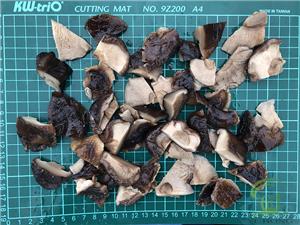
Dried: Lightweight and shelf-stable, but requires extensive prep.
Frozen (IQF): High convenience but requires a perfect (and expensive) cold chain.
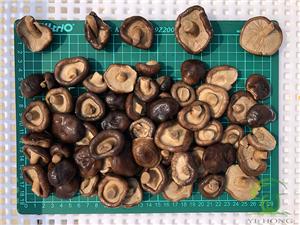
Brined: Salt-preserved to lock in structural integrity and flavor at ambient temperatures.
Comparative Analysis at a Glance
| Criteria | Shiitake In Brine | Dried Shiitake | IQF Frozen Shiitake |
| Logistics | Ambient (No cold chain) | Ambient (Lightweight) | Expensive Cold Chain |
| Processing Time | Quick Rinse/Desalt | Long Soak (12–24 hrs) | Instant (High drip loss) |
| Texture/Bite | Firm & Meaty | Variable/Can be woody | Often Soft/Spongy |
| Shelf Life | 12–24 Months | 24+ Months | 12 Months (Energy risk) |
1. Energy and Storage Infrastructure
Frozen mushrooms (IQF) carry a hidden "energy tax." Maintaining a constant -18°C environment throughout shipping and warehousing adds massive overhead. Shiitake In Brine can be stored and shipped in standard ambient conditions. This eliminates the risk of total product loss during power outages and drastically reduces the carbon footprint of your supply chain.
2. Labor Efficiency and Factory Throughput
Dried mushrooms require a significant physical "footprint" in the factory for rehydration tanks and long lead times. If a production schedule changes suddenly, you cannot easily adjust "in-progress" rehydration, leading to potential waste.
Shiitake In Brine offers superior agility. Following a short desalting cycle, they are ready for the production line, allowing your facility to respond faster to shifting market demands.
3. The "Bite" Factor: Texture and Yield
In large-scale canning or soup production, texture is everything. Frozen mushrooms often become soft because ice crystals rupture the cell walls during thawing.
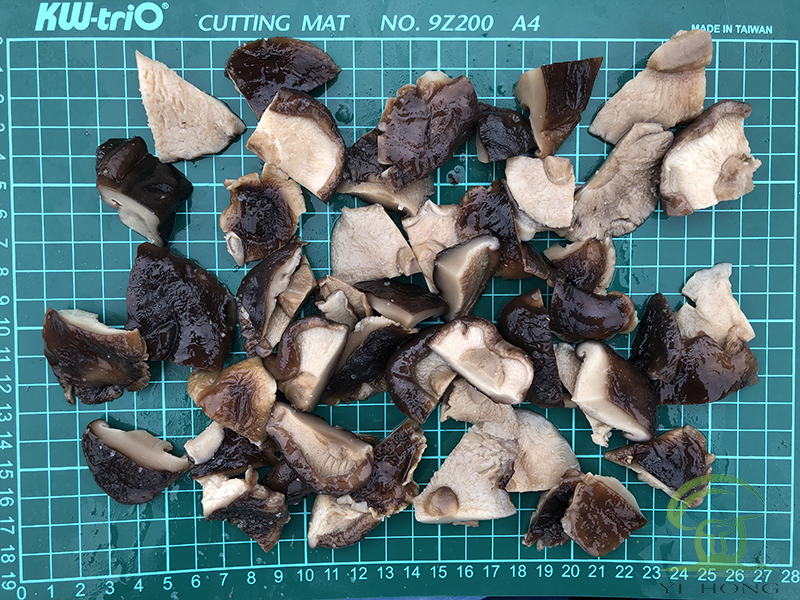
Because our brining process at Xiuyan Manzu Autonomous County Yihong Agricultural Products Co., Ltd. halts enzymatic activity without damaging the cellular structure, our mushrooms (specifically our 2-4cm graded caps) retain a firm, meaty texture even after secondary heat processing, such as retort or pasteurization.
Conclusion: Why Brined Wins for B2B
While dried mushrooms win on shipping weight and frozen mushrooms offer "pour-and-cook" convenience, Shiitake In Brine provides the best balance of cost-efficiency and culinary quality. It delivers the texture of fresh mushrooms and the shelf-stability of dried, without the high energy costs of frozen.
Ready to optimize your production? Xiuyan Manzu Autonomous County Yihong Agricultural Products Co., Ltd. specializes in high-quality primary processing of edible fungi. Based in the heart of Liaoning’s mushroom-growing region, we provide the consistency and volume your production line requires.
Email: yh_2002@126.com
Phone: +86-17640694200
- Industry News
- Product News
- Company News
- Video